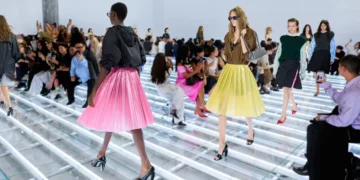



Vogue World Milano had plenty to work with. Staged inside the Galleria Vittorio Emanuele II on September 22, the event brought together Italian fashion, performance, music and a front row packed with some of the industry’s most influential designers. Its premise examined craftsmanship and the human touch in an increasingly technological age.
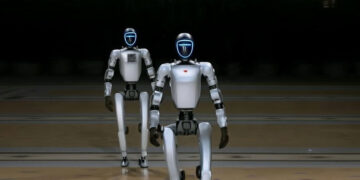
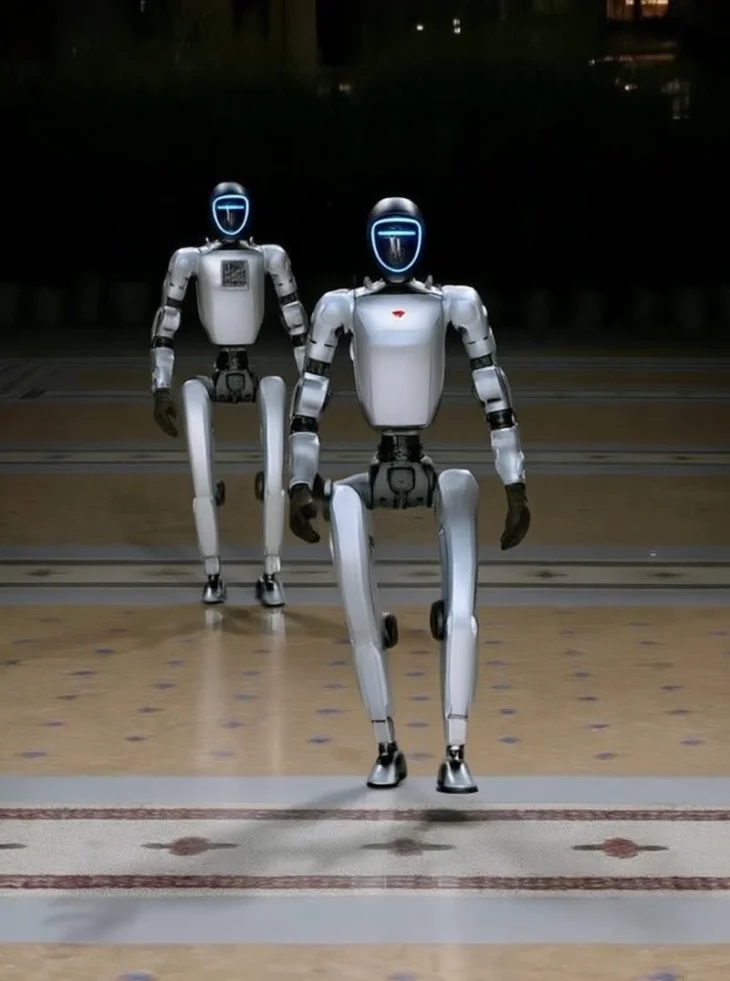
Then the robots arrived. During The Age of Intelligence, humanoid robots from Chinese robotics company Unitree entered the Galleria to Gigi D’Agostino’s L’Amour Toujours. They walked. They gestured. They waved their arms at the audience, seemingly asking for a reaction. And that was basically it.
For a production with the resources, access and creative talent of Vogue World, the sequence felt strangely unimaginative. Robots appearing in public stopped feeling futuristic some time ago, and putting them on a runway does not suddenly turn them into an interesting fashion proposition. They wore no clothes, interacted with fashion in no meaningful way and offered little beyond the novelty of seeing humanoid machines walking through the Galleria.
View this post on Instagram
The front row made the whole thing considerably funnier. Miuccia Prada and Alessandro Michele were among the designers caught on camera as the machines performed. While some guests applauded, footage showed Prada and Michele watching with remarkably little enthusiasm. Their expressions quickly circulated online, largely because they seemed to capture what plenty of viewers were probably thinking: what exactly are we supposed to be impressed by here? Neither designer has publicly explained their reaction, so reading their expressions as criticism would go beyond what the footage establishes. Still, the contrast between the robots enthusiastically soliciting applause and two major designers staring back at them was difficult to ignore.
What makes the sequence especially irritating is that Vogue World had constructed an entire event around human creative ability. The program addressed Italian artisanal traditions and brought hundreds of models, performers and creatives into one of Milan’s defining architectural spaces. The evening had access to generations of fashion knowledge sitting within a few metres of the runway. Against that, a few machines waving their arms felt less like a vision of fashion’s future and closer to somebody remembering at the last minute that AI and robotics are currently fashionable subjects.
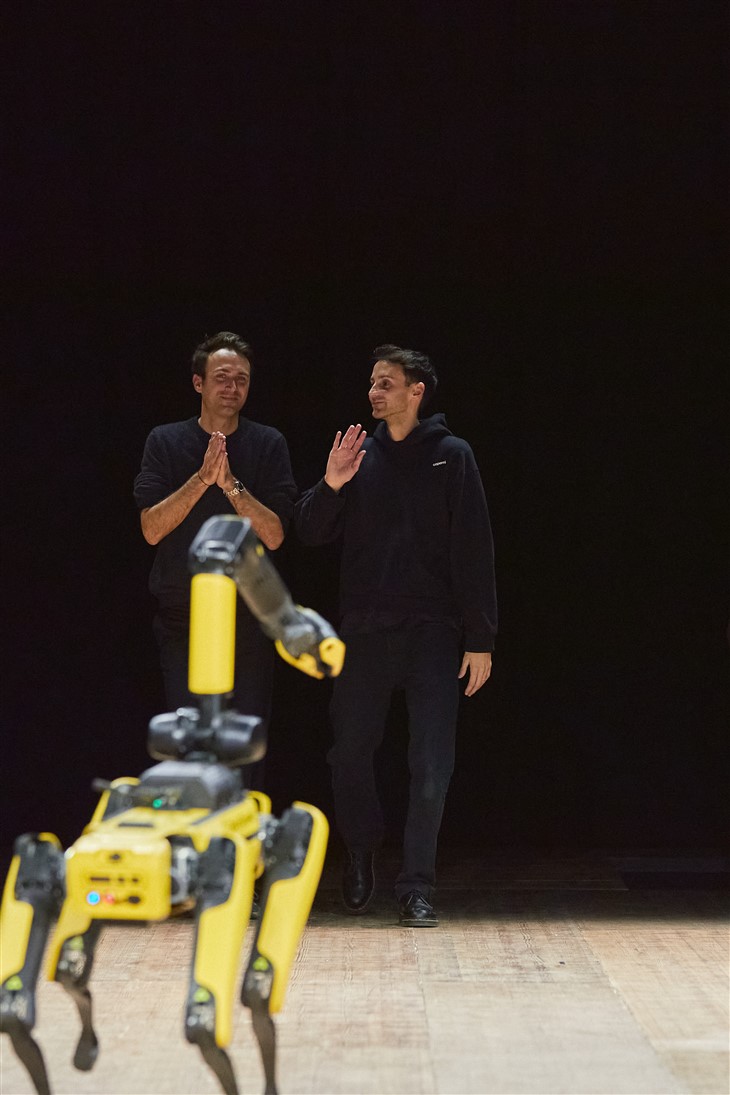
Technology can generate interesting fashion. Simply displaying technology is another matter. Coperni demonstrated the difference back in 2023 when it worked with Boston Dynamics for its Fall Winter show. Those robots interacted directly with models and garments. One extended a mechanical arm toward Rianne Van Rompaey, removed her jacket and later returned it. Whatever one thought of the spectacle, the choreography created an actual relationship between machine, body and clothing.
Vogue World’s robots had no comparable function. They were there because they were robots. That becomes particularly odd given the sophistication of the question Vogue World claimed to explore. Technology is already changing how fashion designs, photographs, markets and distributes its work. AI raises serious questions about authorship, employment, image-making and creative ownership. Manufacturing technology offers another enormous field for experimentation. There are countless ways a production of this scale could have addressed the relationship between machines and human creativity.
Instead, we got robots waving. The irony almost writes itself. An event designed partly around the value of the human hand produced one of its most discussed moments by inserting machines that demonstrated very little beyond their ability to walk in a straight line.
Perhaps that is why the front-row footage works so well. Fashion audiences have become accustomed to being told that every technological intervention represents the future. Sometimes it does. Sometimes a robot on a runway is simply a robot on a runway.
At Vogue World Milano, it was difficult to see much beyond the latter.