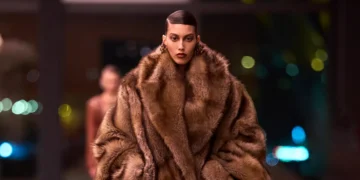



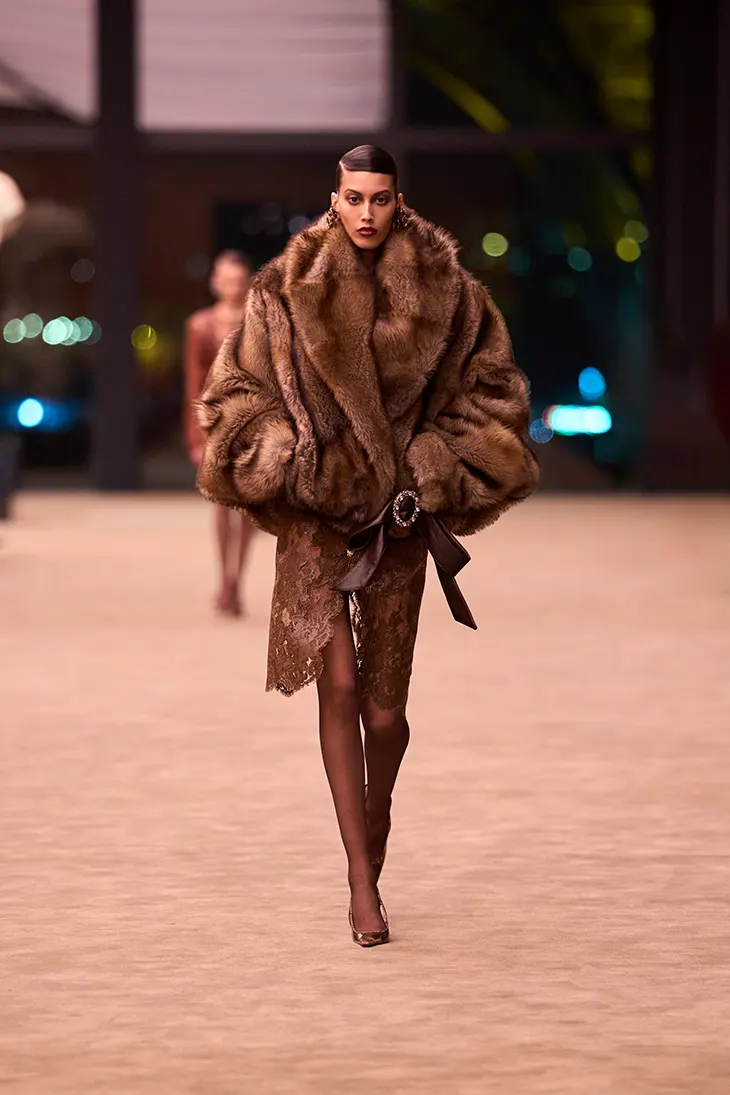
Anthony Vaccarello approaches Saint Laurent Women’s Winter 2026 through the house’s most fundamental principles. Structure and construction guide the collection, stripped of nostalgic reference and reduced to precise form. Vaccarello develops garments as architecture for the body, guided by purity and repetition. Through this discipline he builds a collective understanding of what Saint Laurent represents under his direction. Repeated silhouettes and consistent proportions establish a clear stylistic language that anchors the collection from beginning to end.
FALL WINTER 2026
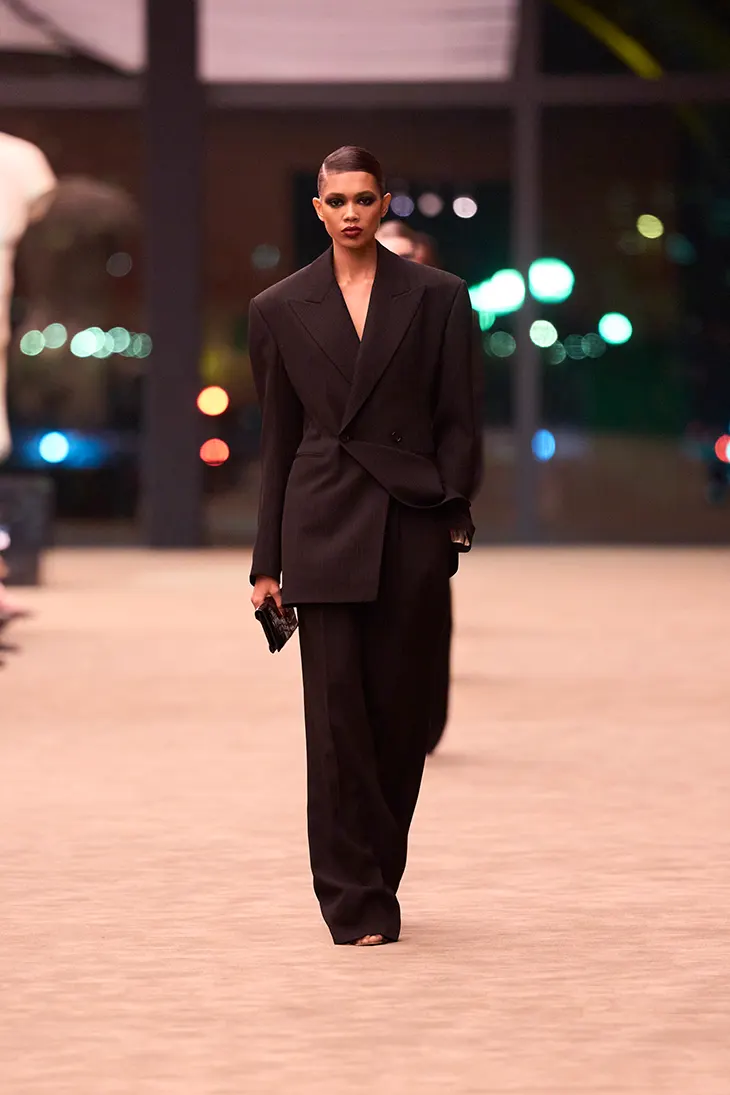
Vaccarello introduces a series of black suits in single and double-breasted forms. The silhouettes recall the sharp mood associated with the late 1970s and early 1980s while remaining grounded in contemporary proportion. The suits convey emotion through shape and restraint. Strong shoulders slope outward before narrowing toward a softly defined waist, a line that appears repeatedly across the collection.
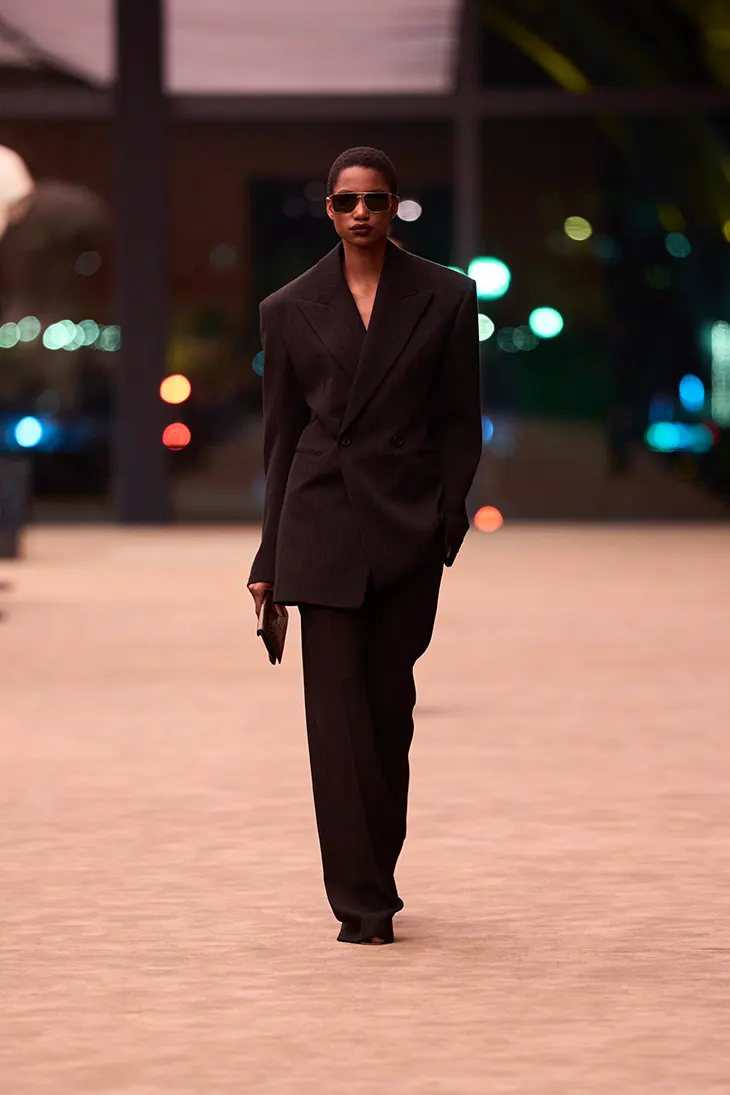
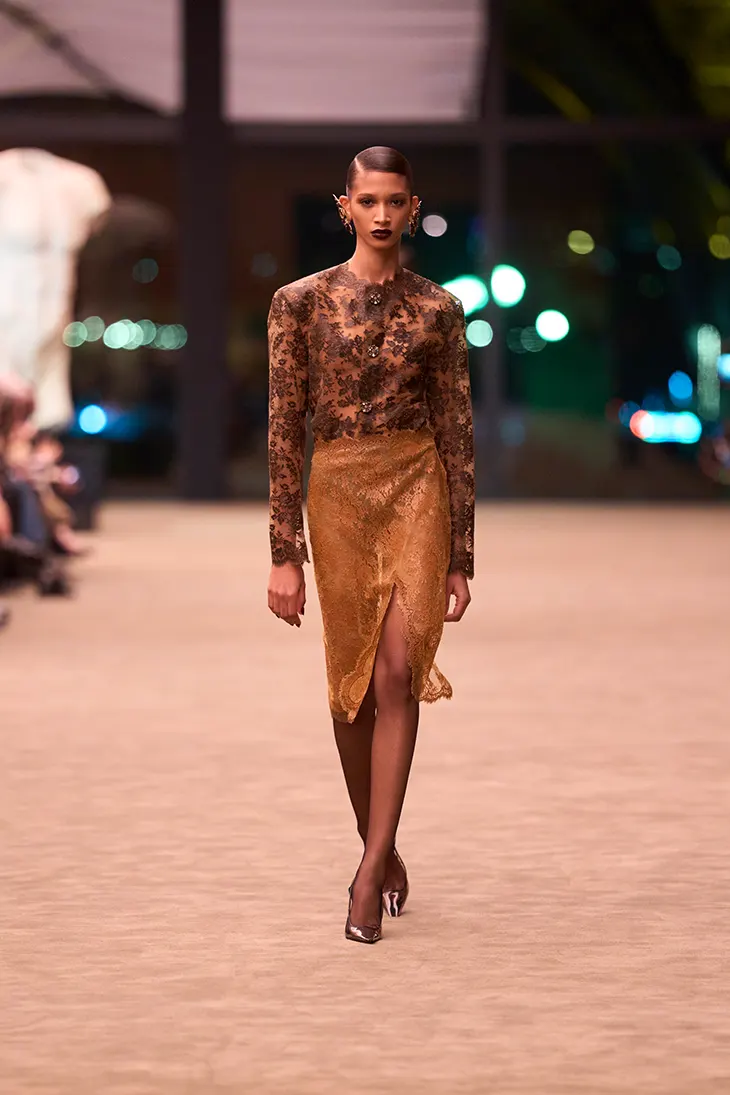
The house icon Le Smoking returns with renewed emphasis on evening elegance and relaxed confidence as Vaccarello closes the collection. Its attitude carries a quiet shrug that replaces overt bravado.
Cultural and artistic references shape the narrative direction of Winter 2026 through Vaccarello’s continued use of cinematic storytelling. The narrative moves between bourgeois stillness and a sense of urban vulnerability. Actress Romy Schneider emerges as a central reference point. Vaccarello looked specifically to her role in the 1971 film Max et les Ferrailleurs. Schneider carried an elegance touched by fatigue and introspection, a quality that informs the emotional tone of the collection. Her presence connects with another influence in the writing of Tennessee Williams. Vaccarello considers the troubled central character in The Roman Spring of Mrs. Stone while shaping the mood of the season.
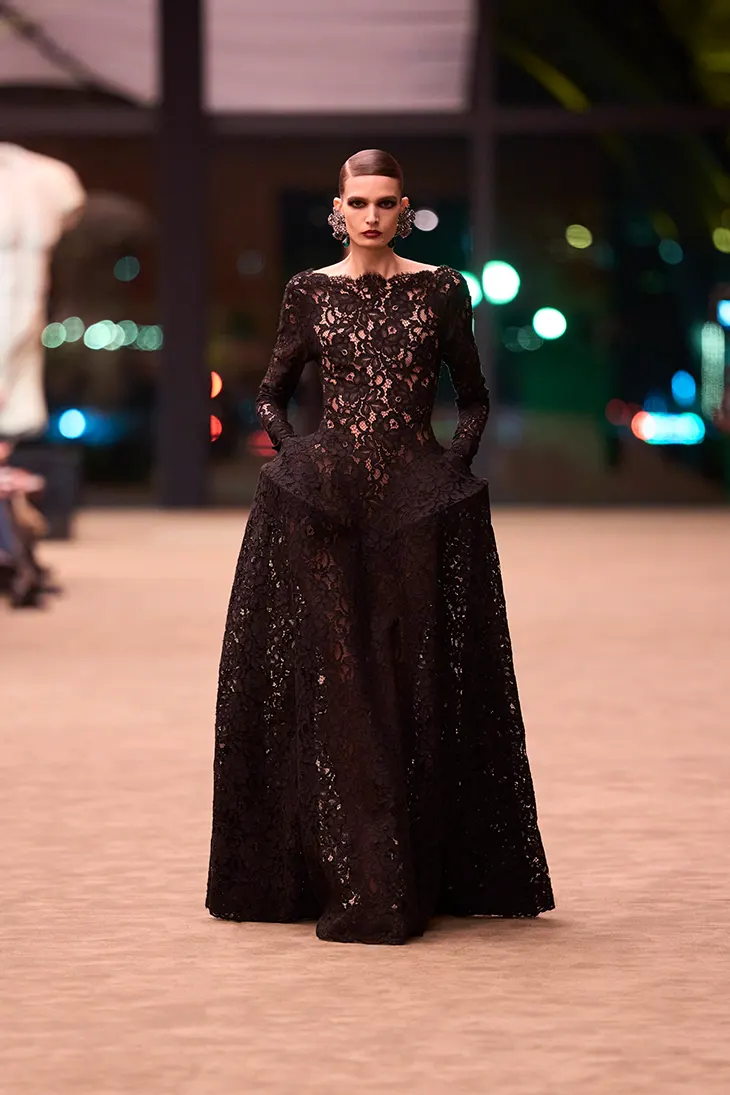
Literary reference also appears through Gore Vidal’s novel The City and the Pillar. The questioning tone of the book resonates with the collection’s challenge to established codes. These references guide Vaccarello toward a focus on intimacy and emotional vulnerability. He directs attention toward personal feeling, creating garments that emphasize closeness and tactile presence.
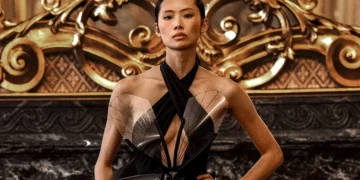
For eveningwear Vaccarello introduces silicone-coated sheer lace. The treatment alters the behavior of lace by allowing it to hold shape with a firmness closer to tailoring. This shift changes how the material interacts with the body. At the same time, structured suiting adopts softer movement. The collection inverts familiar expectations through this material dialogue. Lace assumes a position of strength while tailoring adopts a fluid response.
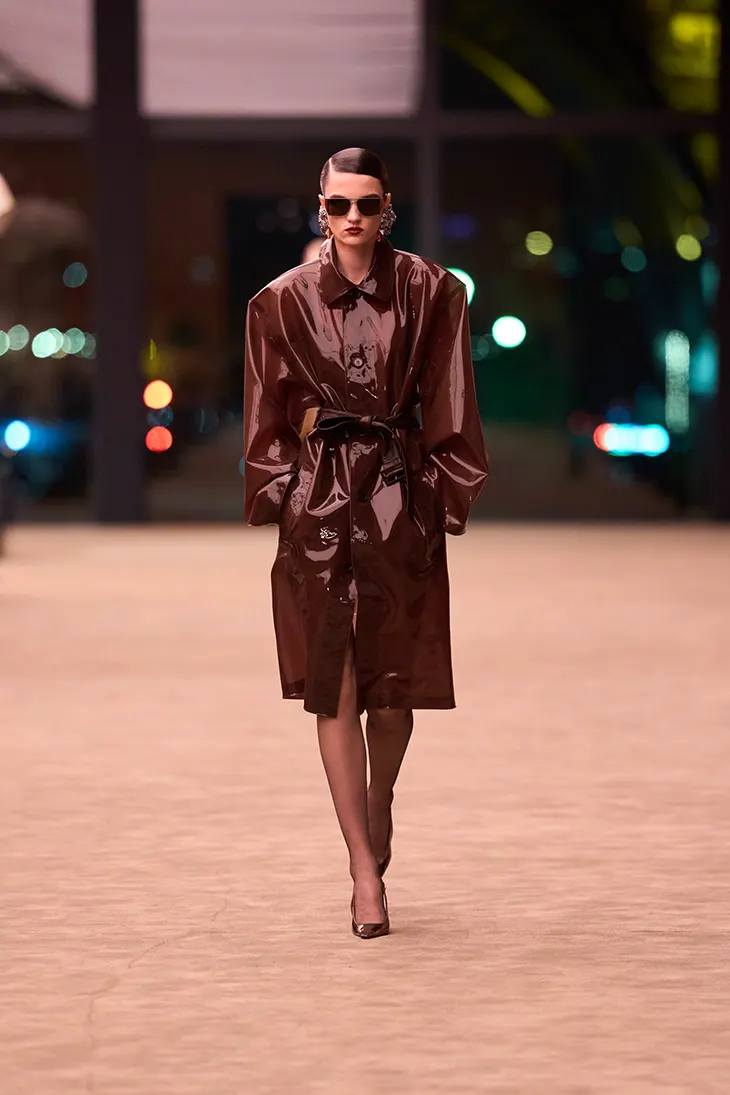
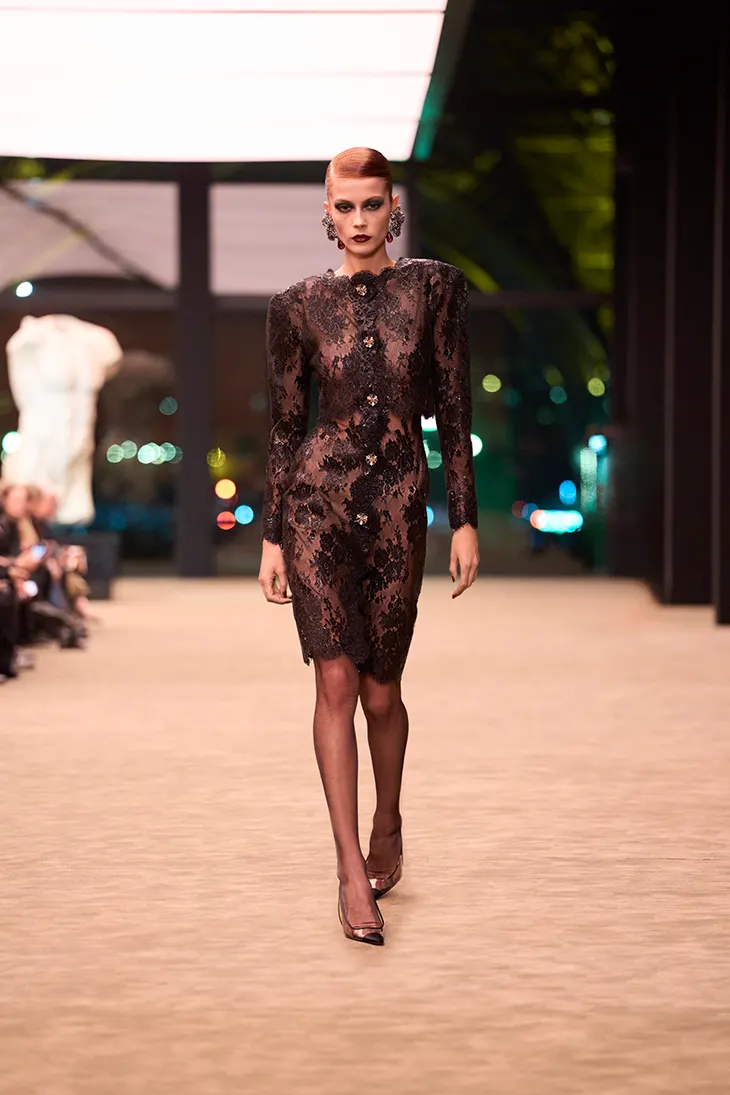
Shearling coats appear in generous volumes and fasten at the hip with belts. Their draped construction creates a protective sense of enclosure around the wearer. Color enters the collection through painterly tones including burnt sienna, teal, French blue, and deep brown. These shades extend the visual rhythm established by the black tailoring. Sculptural golden dove jewelry punctuates the garments and introduces a vertical accent that rises above the silhouettes.
The runway unfolds inside a modernist residence constructed from glass, wood, and leather. The structure presents an interior that suggests privacy and intimacy. The setting could exist in many cities, yet Vaccarello anchors it through a direct reference to the house’s history. At the center of the space stands an oversized replica of a bust once displayed in Yves Saint Laurent’s apartment. Through the glass walls the Eiffel Tower appears in the distance.