


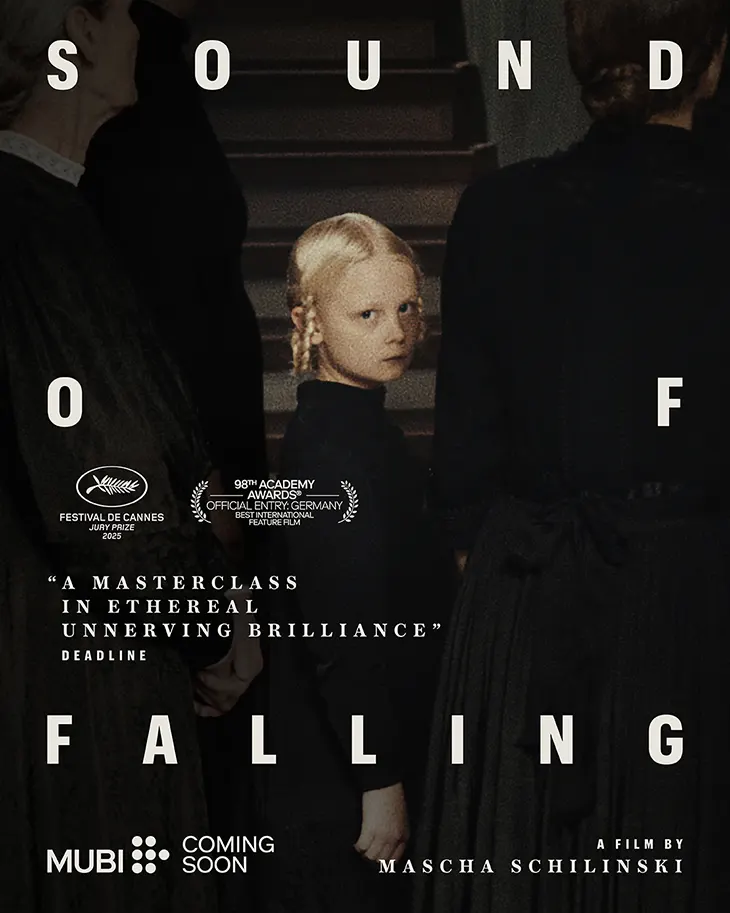
Sound of Falling comes as a limited theatrical release scheduled in the US for January 16th and on 6th of March 2026 in UK and Irish, this is the second feature from Mascha Schilinski – a film that’s already made waves on the festival circuit, including a Jury Prize at Cannes and the Silver Frog at Camerimage. It’s a story that lingers, much like the memories that haunt its setting.
A Farm as Witness
The film’s heart beats in a quiet corner of northern Germany, on a farm that becomes home to four girls – Alma, Erika, Angelika, and Lenka – across different eras: the 1910s, 1940s, 1980s, and today. Each chapter unfolds in the same space, but time and circumstance shape their lives in ways both subtle and profound.
MORE CINEMA COVERAGE ON DSCENE
Schilinski explains the inspiration behind this structure: “We spent a summer on the farm in the Altmark. We actually planned to work on our own projects. While procrastinating and drinking wine in the evening, we asked ourselves, who or what lived in this place? We began to write down images and small scenes that rose up in us. That’s how our characters came into being.”

Echoes and Absences
The film’s narrative is shaped by what’s left unsaid – traumas and secrets that ripple across generations. Schilinski and her co-writer Louise Peter immersed themselves in the farm’s history: “Because the farm we stayed in stood vacant for 50 years, we were able to walk through the individual rooms and walk through its past. Then we found an old photograph… three women stood in the farmyard and looked directly at us. That did something to us, because we were on the other side, in our present, as if these women were breaking the fourth wall and looking directly at us from the past. That basically gave us the atmosphere that runs through the whole film.”
The Female Gaze and Unspoken Stories
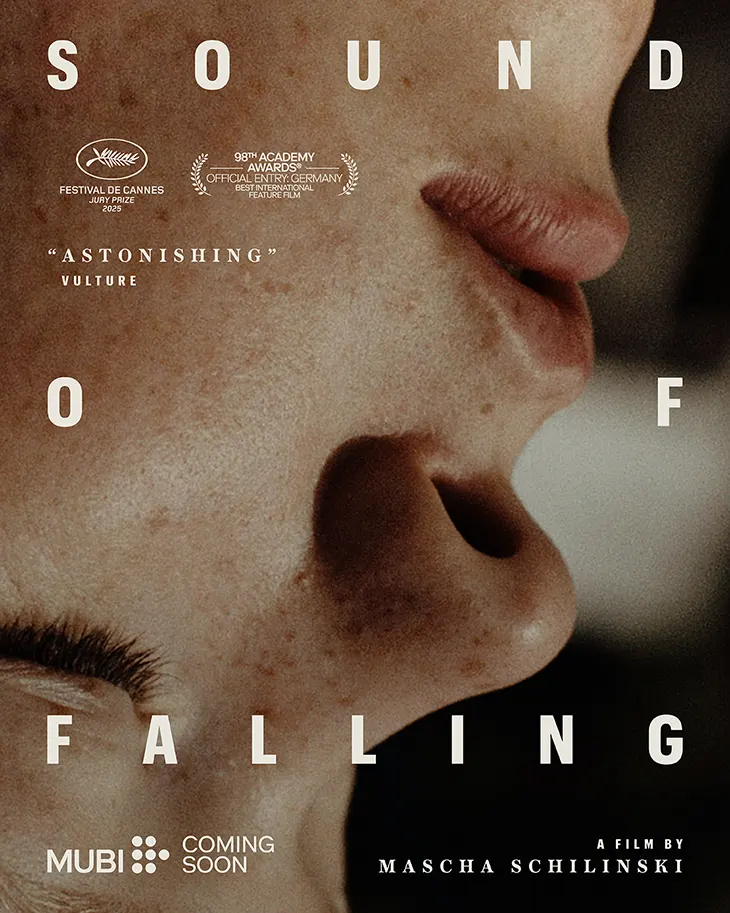
What stands out in Sound of Falling is its refusal to dramatize trauma for spectacle. Instead, it’s in the small gestures, the routine chores, and the moments of silence – what Schilinski calls “tiny quiet tremors.” She reflects, “During our long research, we noticed that there was hardly a trace of this type of female gaze in the historical material… There were many such blank spaces, things that were not talked about, but which showed in the margins. Where such secrets became palpable, we tried to explore what might have been there with the help of our characters.”
Memory, Trauma, and the Everyday
The film’s aesthetic is luminous, yet never shies away from the harsh realities of rural life. Schilinski recalls a haunting line from her research: “A maid looks back on her life and says: ‘In truth, I have lived completely in vain.’ That did so much to us, and we asked ourselves what such a terrible sentence means today and to what extent such traumatic experiences affect women’s lives through time.”
She adds, “Even today, there are many people, not only women, who only survive every day instead of being able to live. This is one of the big topics that occupied us, especially with regard to children – is there such a thing as a transmission of trauma across the generations?”
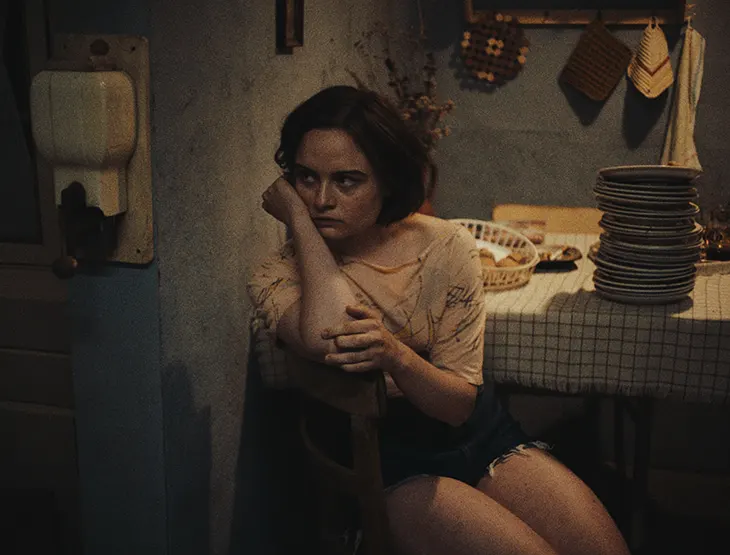
More standout stills from the Sound of Falling in our gallery:
Universal, Yet Deeply Personal with a Cast to Remember
Although the story is anchored in German history, its themes are universal. Schilinski notes, “We could have set a similar story in any other place. But this very subjective view through the eyes of the individual women and girls… could have taken place anywhere in the world. The attempt to track down the gaps in people’s felt experience for which there are no words, where language is not yet present.”
The ensemble – Hanna Heckt, Lea Drinda, Lena Urzendowsky, Laeni Geiseler, Susanne Wuest, and Luise Heyer—bring these layered characters to life, each leaving their own imprint on the film’s century-long timeline.
Watch the new trailer:







this really is a masterpiece