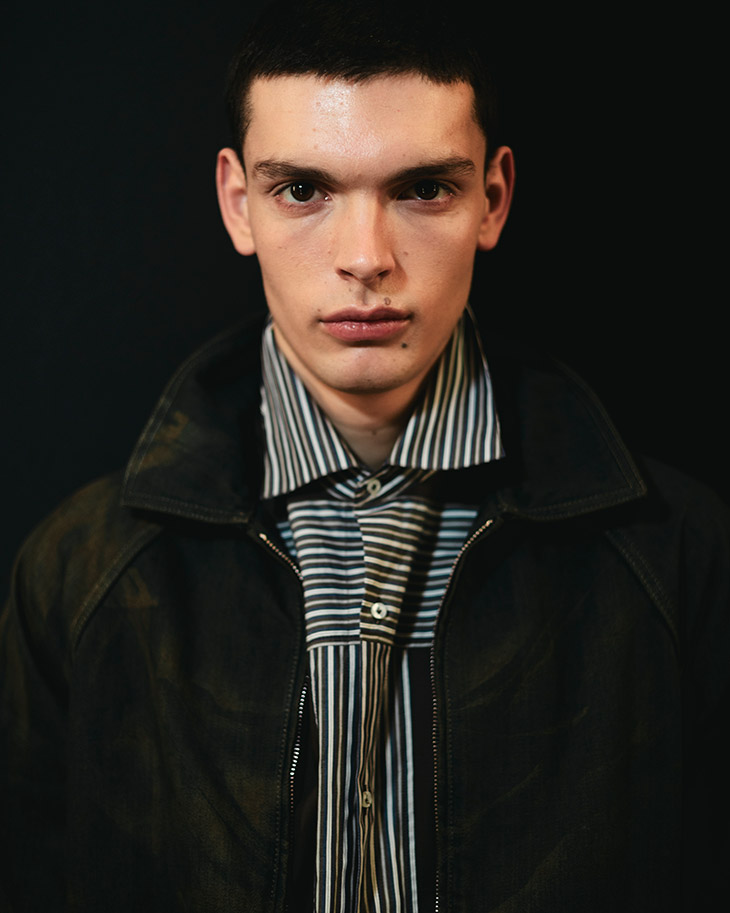



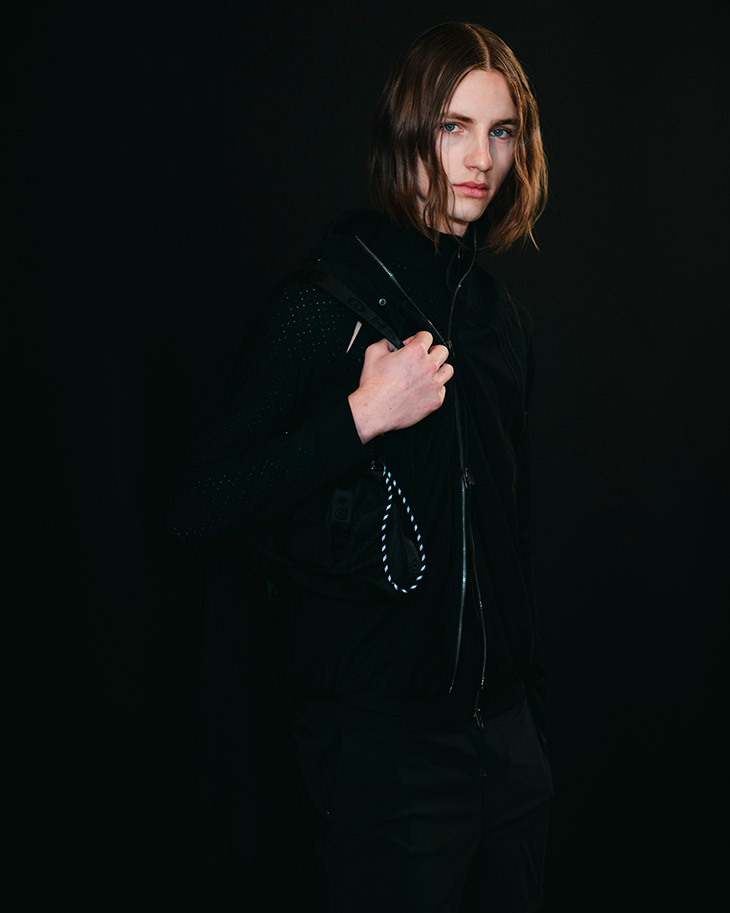
Designer Saul Nash unveiled his Fall Winter 2026.27 menswear collection, titled Masquerade, on January 28th, during the recently concluded Milan Fashion Week. Discover an exclusive behind-the-scenes glimpse captured by fashion photographer Sohom Das for DSCENE Magazine.
BACKSTAGE
Masquerade examines clothing as a tool for shaping identity. Nash drew initial research from Notting Hill Carnival, where costume traditions trace back to mimicry ceremonies and public performance. That starting point guided him toward Venetian masquerade customs, where masks allowed wearers to transform and disguise themselves. These references framed the collection’s interest in performance, concealment, and self-definition.
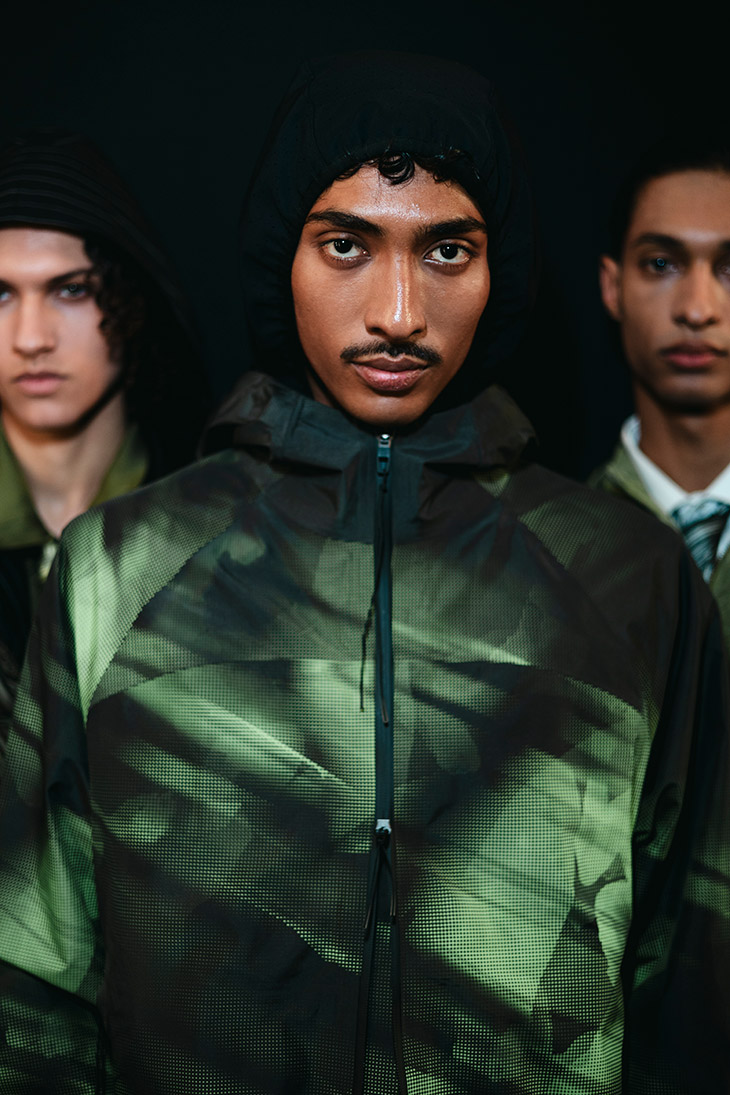
Nash filtered those ideas through the experience of growing up in London. He developed a personal version of power dressing that balances tailoring with casual codes. Garments act as tools that allow the wearer to navigate different social roles without abandoning personal habits of dress. The designer describes the clothes as a form of masquerade for everyday life, designed to support confidence and self-expression.
The collection spotlights the tracksuit, rooted in the brand’s sportswear origins and Nash’s signature uniform. A technical tracksuit overlays a printed suit silhouette, recalling instances where sportswear alone proved insufficient for formal settings. The approach celebrates adaptation and self-recognition while preserving the garment’s essential identity.
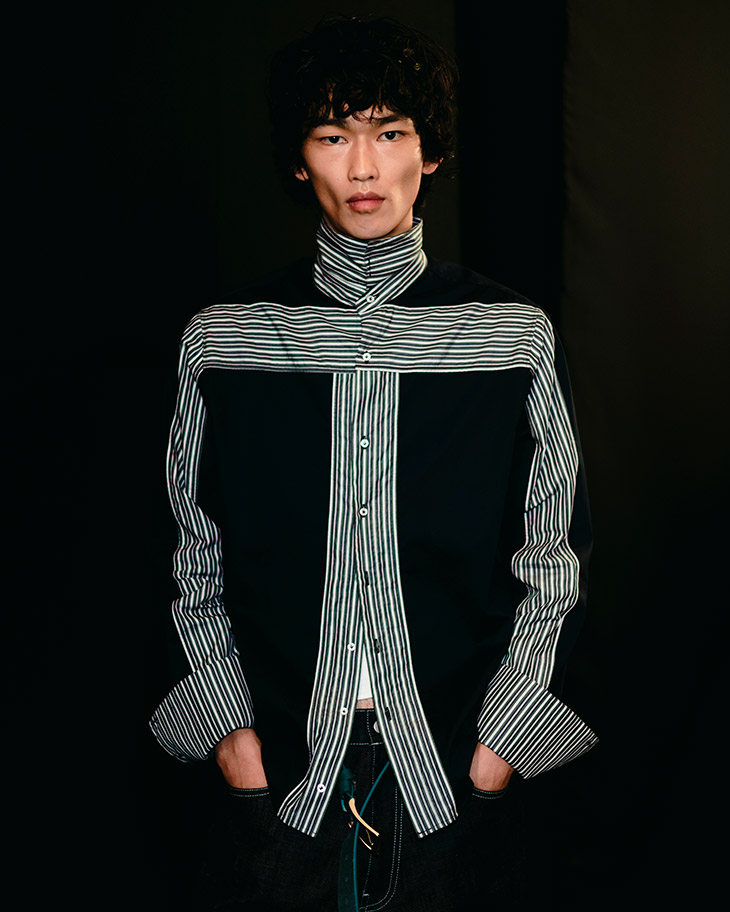
References to 1980s British and Italian tailoring appear throughout. Suit jackets feature built-in hoods and detachable sleeves. Shirts display linear markings inspired by Ben Magid Rabinovitch’s photograph Tamaris from Dirge (1931). Stretch cotton fabrics transfer Nash’s kinetic approach from sportswear into tailored garments without losing flexibility.
Formal wear includes a pinstriped all-in-one jumpsuit shaped after Wall Street suits and produced in merino stretch wool. The cut reads wide and warped on the body, echoing the exaggerated proportions associated with masquerade costumes.
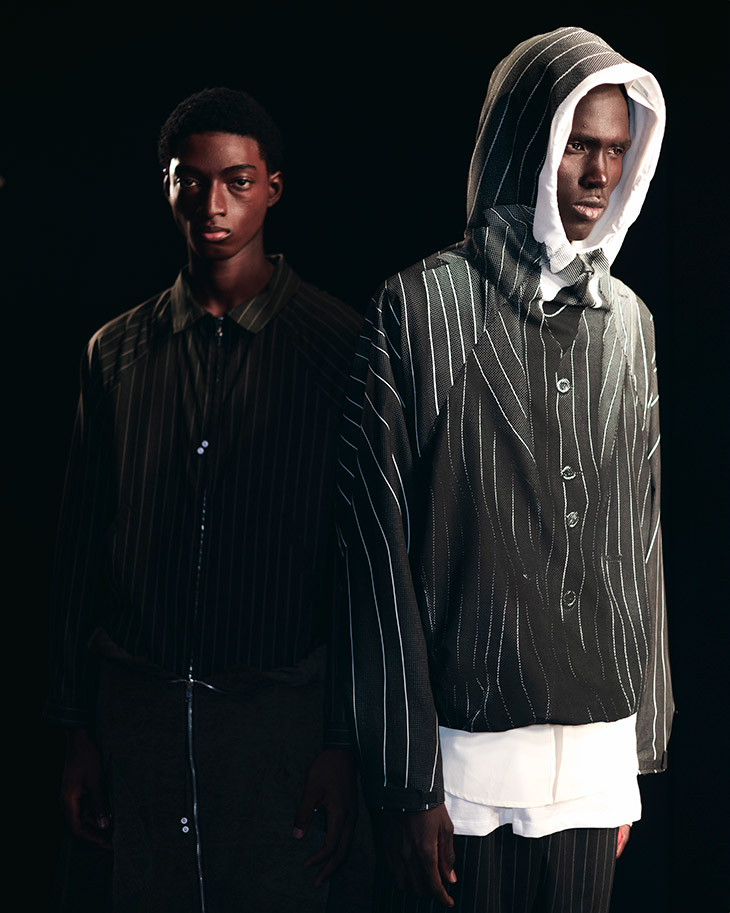
Outerwear introduces adaptable designs, including military drill jackets with collars that change configuration, cropped trench coats using Nash’s kinetic cutting method, and padded jackets with elongated ribbed knit sleeves. Lightweight PRIMALOFT® Gold insulation supports volume without heaviness.
Color choices range through greens, navies, and earthy browns. Textural contrasts pair viscose LENZING™ utility trousers with recycled nylon zip-ups, mohair blazers, and cardigans in alpaca and merino wool. Compression tops printed with hazy body imagery and denim twinsets lasered with sculptural physiques continue the theme of disguise and transformation, closing Masquerade as a study of how clothing enables shifting selves.