



In early 2026, The New York Times named Yunnan the only destination in China on its “52 Places to Go” list. For Los Angeles-based designer Xiaodi Xie (Amber), this recognition simply echoed what she has always known.
Her answer doesn’t lie in motifs or ornamentation, but in design thinking itself. Through multi-regional practice, Xie has developed a method for translating visual language, culture, and spatial rhythm into forms that can be used, understood, and felt. YarnGi, the home decor brand she co-founded with landscape designer Yue Zhao (Lulu), is the most visible result of this inquiry, a brand that threads cultural meaning into contemporary life through textile. Now based in the U.S. and steadily gaining visibility through exhibitions, curated markets, and cultural collaborations, YarnGi has resonated with a growing audience drawn to its cross-cultural sensibility and tactile storytelling. As co-founder and design lead, Xie brings conceptual depth and systems-level clarity to the brand, ensuring every object is not only beautiful, but communicative.
From Yunnan to New York to Los Angeles: Design Language in Motion
Born in the culturally layered highlands of Yunnan, Xie earned her MFA in Communication Design from Pratt Institute in New York and spent five years working across brand, exhibition, and cultural design. Returning to Yunnan, she began exploring how local knowledge systems could inform global design thinking, an inquiry she now continues from her Los Angeles studio.
Xiaodi’s path defies the linear arc of a traditional career. At Challenge Bookstore, she led a rebranding and spatial redesign that helped increase sales by over 30% and earned the title “Most Beautiful Urban Bookstore.” As creative director of the Yunnan International Innovation and Entrepreneurship Competition (YiiEC), she built a visual identity that helped transform a regional initiative into an international platform, with editions in Singapore, London, San Francisco, and Toronto, bridging Asian creative ecosystems with North American audiences.
From bookstores to global events, Xie’s work renders complexity with clarity, building visual systems that carry emotion, memory, and meaning across borders.
Trace-Form Design: Method Grown from Sensory Experience
“Design is not about decoration. It is about organizing meaning.” With this belief, Xiaodi Xie developed Trace-Form Design, a methodology that transforms lived experience into functional, resonant form.
Rather than treating culture as surface reference, Trace-Form Design operates as a system for translation. It brings together visual structure, material logic, and user perception, allowing complex cultural contexts to be communicated clearly within contemporary design frameworks. In the U.S. creative landscape, the method has offered an alternative to fixed East-West binaries, demonstrating how design can function as a shared language rather than a symbolic shorthand.
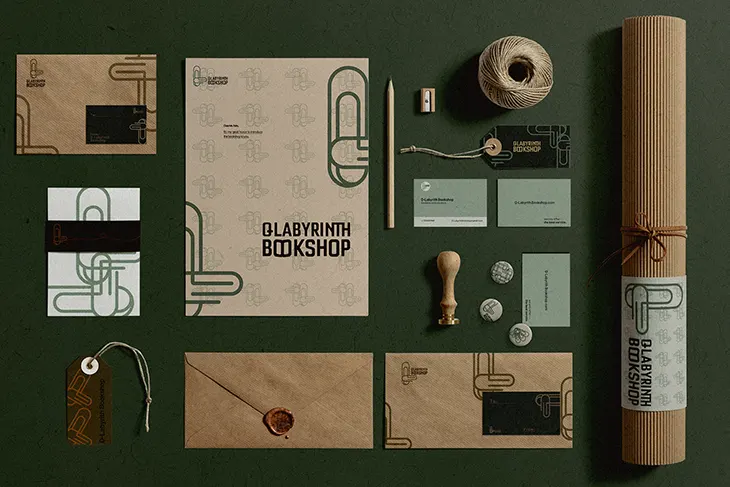
This approach has shaped cross-regional design projects. At YiiEC, Xie built a visual system that connected innovation communities in Asia and North America, helping the platform scale internationally to San Francisco, Toronto, and beyond. With Q-Labyrinth, she redefined a bookstore’s spatial identity by transforming the act of reading into a navigable rhythm of movement and form, earning international recognition. YarnGi, Trace-Form Design informs a product system where textile, color, and story come together to support cultural exchange through everyday use.
Across these projects, Trace-Form Design proves its relevance not as a visual style, but as a working methodology, one that supports scalability, accessibility, and cross-cultural resonance.
Projects as Practice: Designing for Connection
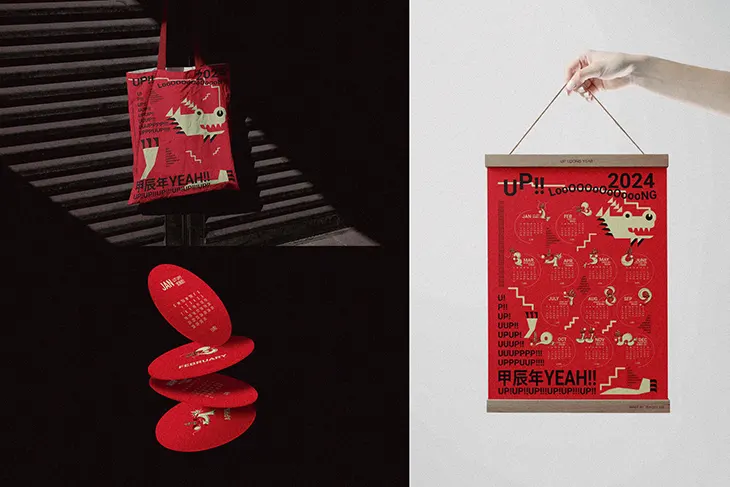
Across her own ventures and commissioned work, her projects don’t just shape visuals, they structure how meaning is delivered, shared, and lived.
In Aerally, a tennis brand inspired by Yunnan’s cloud formations, she brought poetic spatial rhythm into sports branding, aligning local perception with global communication. Across sectors, from civic platforms to commercial packaging, her work translates cultural logic into accessible formats that integrate seamlessly into modern life.
Rather than treating culture as narrative or ornament, Xie embeds it into function. Her portfolio reflects a consistent aim: to make design a tool of everyday connection, clear, scalable, and socially resonant.
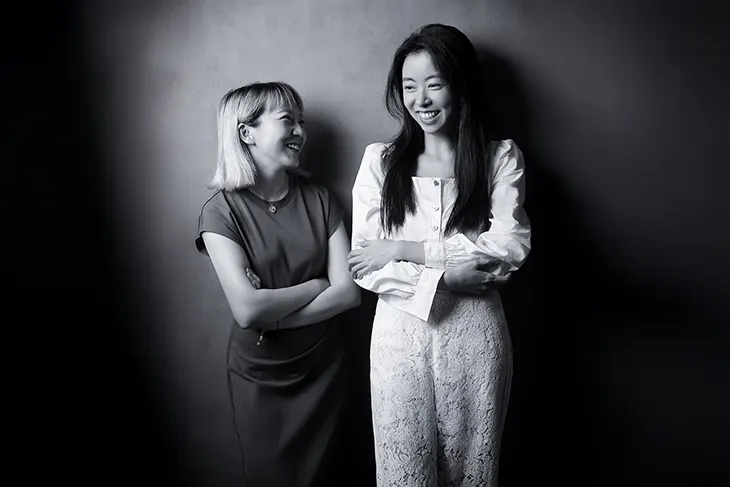
The MET Moment: When a Brand is Born
In the summer of 2024, a visit to The Met became a quiet turning point for YarnGi’s founders, Amber and Lulu, both shaped by Yunnan and years of practice across design disciplines in Asia and North America. What emerged was not a desire to create objects, but to articulate a new home language, one that translates cultural memory into contemporary living.
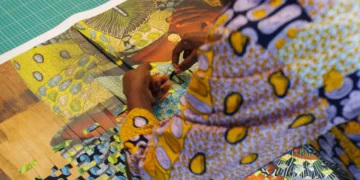
Named after “Yarn,” a thread of memory, and “Gi,” the act of giving, YarnGi is rooted in textile storytelling. Its collections translate the warmth, rhythm, and symbolism of Yunnan into modern home pieces that resonate across cultures. Moving fluidly between craft and design, tradition and innovation, the brand has gained recognition for its narrative depth, material sensitivity, and relevance within both Asian and Western design contexts.
Collaborative Language of Cultural Translation
At YarnGi, Amber and Lulu transform motifs and materials into cues that speak to both ancestral legacy and modern life.
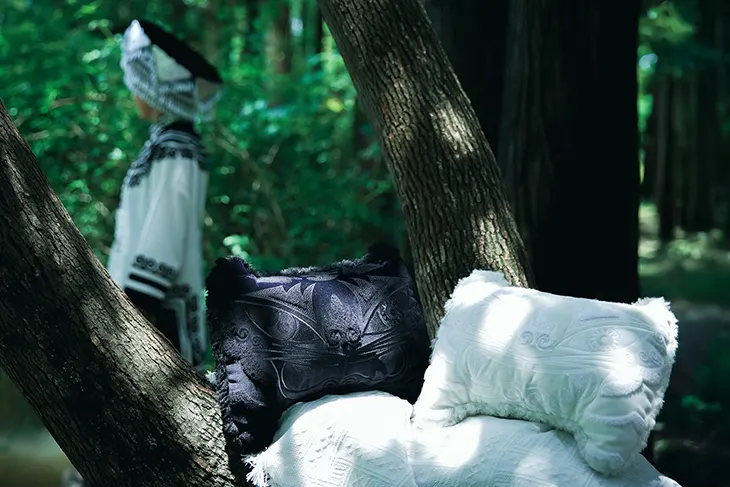
Tiger Lineage draws from Yi totems, channeling mythic energy and spiritual protection.
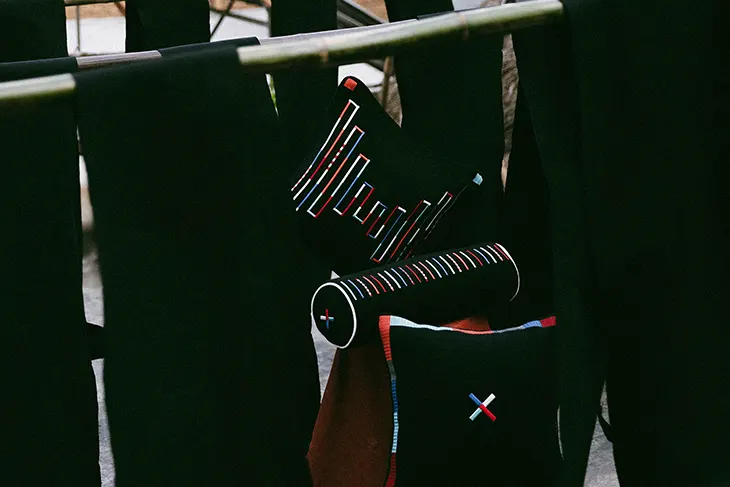
Terrace Loop reflects Hani rice terraces and traditional palettes into layered visual rhythm.
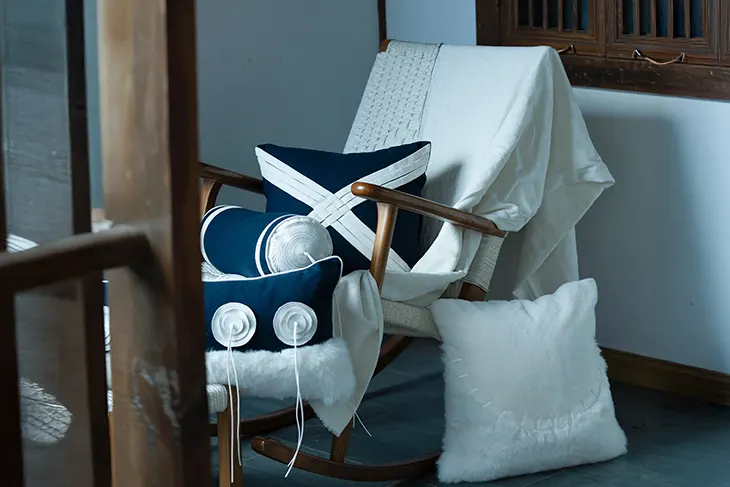
Moon Weaver inspired by Naxi women, expresses quiet strength and enduring femininity.

Fire Bloom rooted in the Yi Torch Festival, celebrates vitality and rebirth through fiery motifs.
Rather than replicating ethnic styles, YarnGi offers translation, products that are not artifacts, but invitations. Its core values, Rooted, Authentic, Refined, Crafted, are lived practices, not slogans.
Merged & Elevated Version
For Xiaodi Xie, design is a form of cultural mediation. By distilling the most essential sensibilities of ethnic traditions, material intelligence, symbolic rhythm, and lived ritual, she translates minority cultural knowledge into contemporary systems for global use. Working between Asian heritage and North American frameworks, her practice demonstrates how design can protect cultural memory through use: embedding craft, story, and meaning into everyday life. In doing so, her work positions design as a connective force, one that enables cultural continuity, cross-cultural understanding, and a shared aesthetic language across cultures.