


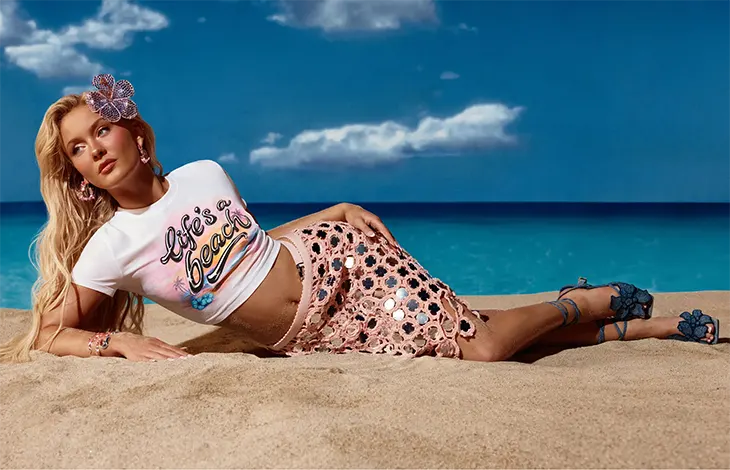
Desigual has officially named Zara Larsson as the face of its Spring Summer 2026 “Life’s a Beach” campaign. On the surface, the collaboration is a high-energy fusion of saturated pinks, Y2K silhouettes, and the Swedish pop star’s undeniable digital influence. However, beneath the vibrant florals and mirrored textures lies a lingering tension from the brand’s previous creative direction, one that Larsson’s vocal advocacy makes difficult to ignore.
NEWS
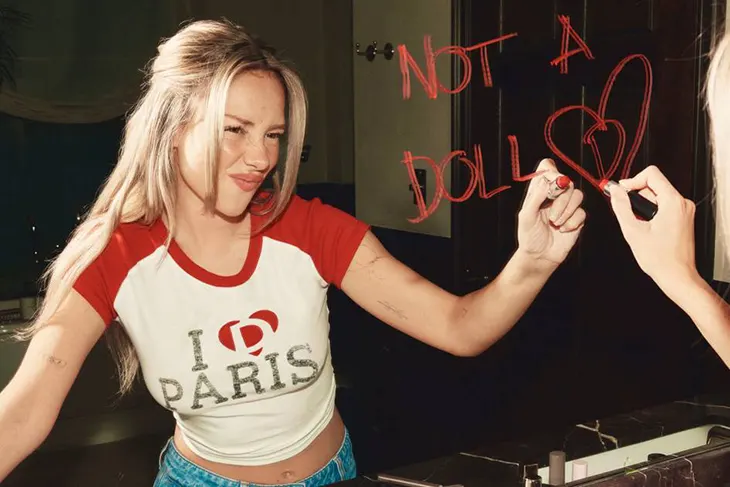
The controversy stems from Desigual’s Spring Summer 2025 “I Am Not a Doll” campaign. Intended as a statement on female autonomy and a rejection of objectification, the campaign saw a model repeating the phrase while surrounded by mannequins. While the brand aimed for a broad feminist message, it fundamentally ignored the specific cultural weight of the word “doll.” Within trans communities, specifically among Black and Latinx trans women, “doll” is not a slur or a term of objectification; it is a vital term of identity, recognition, and belonging rooted in ballroom culture.

At a time when the political rallying cry “Protect the Dolls” was circulating in response to a surge in anti-trans legislation, Desigual’s campaign felt tone-deaf to many. By framing the “doll” as something to be rejected, and doing so without trans representation or acknowledgment, the brand created a significant disconnect with the very community that has historically championed the term.
This is where the Spring Summer 2026 campaign becomes a point of contention. Zara Larsson is not just a pop star; she is a self-described ally whose creative world is shaped by “girls, gays, and thems.” Her career is built on a foundation of LGBTQ+ support and a public persona that values social awareness.
Zara Larsson’s involvement with Desigual highlights a strategic attempt by the brand to move past its recent controversies by leaning on her established credibility as a vocal advocate for the LGBTQ+ community. This collaboration functions as a rebrand strategy through association, utilizing Larsson’s influence to reset the brand’s image without explicitly addressing or rectifying the fallout from the “I Am Not a Doll” campaign. The partnership opts for the aesthetic of advocacy over true reconciliation, using high-visibility trends to reset Desigual’s image while leaving its stance toward the trans community blurred.

The “Life’s a Beach” campaign is a pivot toward a high-impact, seasonal mood, but it serves as a reminder that brand narratives do not exist in a vacuum. By tapping Larsson, Desigual gains access to a younger, socially conscious audience. Whether that audience will see this as a fresh start or a strategic distraction from the unresolved critiques of 2025 remains to be seen.
The tension between the brand’s past imagery and Larsson’s current advocacy suggests that, for Desigual, the path to true cultural resonance requires more than just a new face, it requires an understanding of the voices it previously silenced.