


Guggenheim Pop: 1960 to Now arrives as one of the year’s most important New York exhibitions, a sprawling survey that traces how Pop art transformed the banal into the sacred, the commercial into the iconic. On view through January 10, 2027, the show unfolds next to the Guggenheim’s rotunda with the kind of conceptual sentiment that makes casual museum-going feel essential.
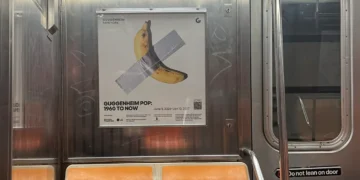
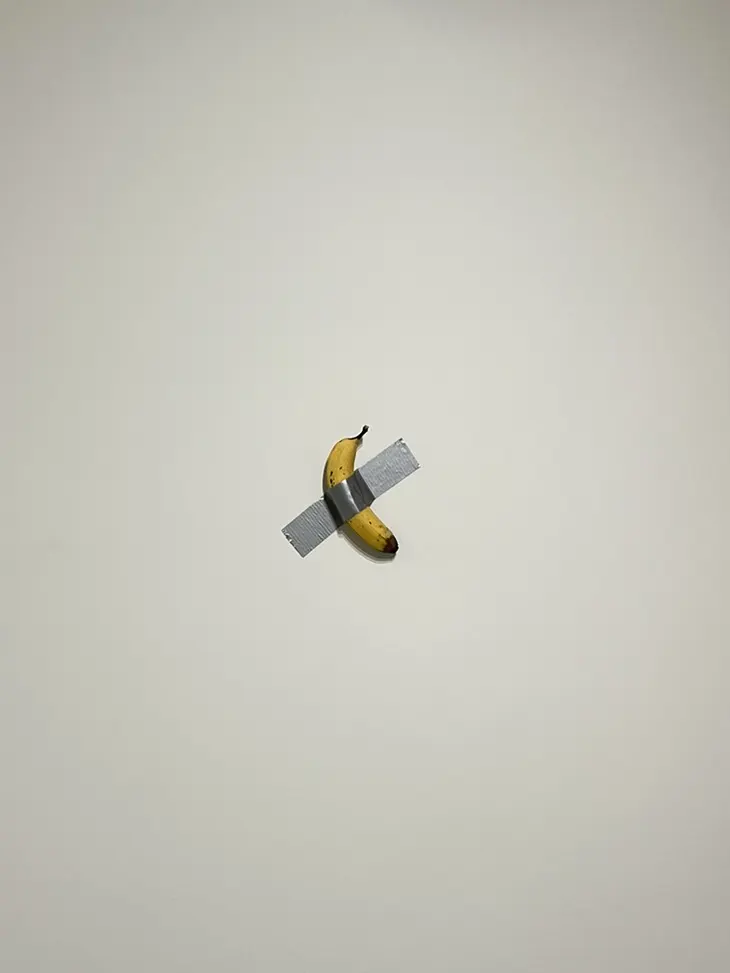
But let’s start with what everyone’s talking about: the banana. Or, more precisely, Maurizio Cattelan’s Comedian (2019), the third of three now on public display (the 2nd is currently on display at Rome’s Maxxi Museum). The artwork’s notoriety has only deepened since it sold at Sotheby’s New York to cryptocurrency entrepreneur Justin Sun, who announced he’d pay for it in TRON, the digital currency he created, and then consume it. What might sound like performance art’s ultimate punchline took a stranger turn when Sun, flanked by journalists at one of Hong Kong’s most expensive hotels, delivered a speech praising the work as “iconic,” drew comparisons between conceptual art and cryptocurrency, and then ate the banana on camera.
The piece’s durability becomes part of its mythology. In 2023, a South Korean student at the Leeum Museum of Art in Seoul removed the banana from the wall, consumed part of it, and restuck the peel, claiming hunger and arguing that “damaging a work of modern art could also be [interpreted as] artwork.” The Guggenheim’s iteration sits intact and closely guarded, at least for now, a quiet rebuke to the chaos of its recent past and a meditation on what it means to own an artwork designed to be consumed, replaced, ephemeral.
Beyond the Banana: The Essential Stops
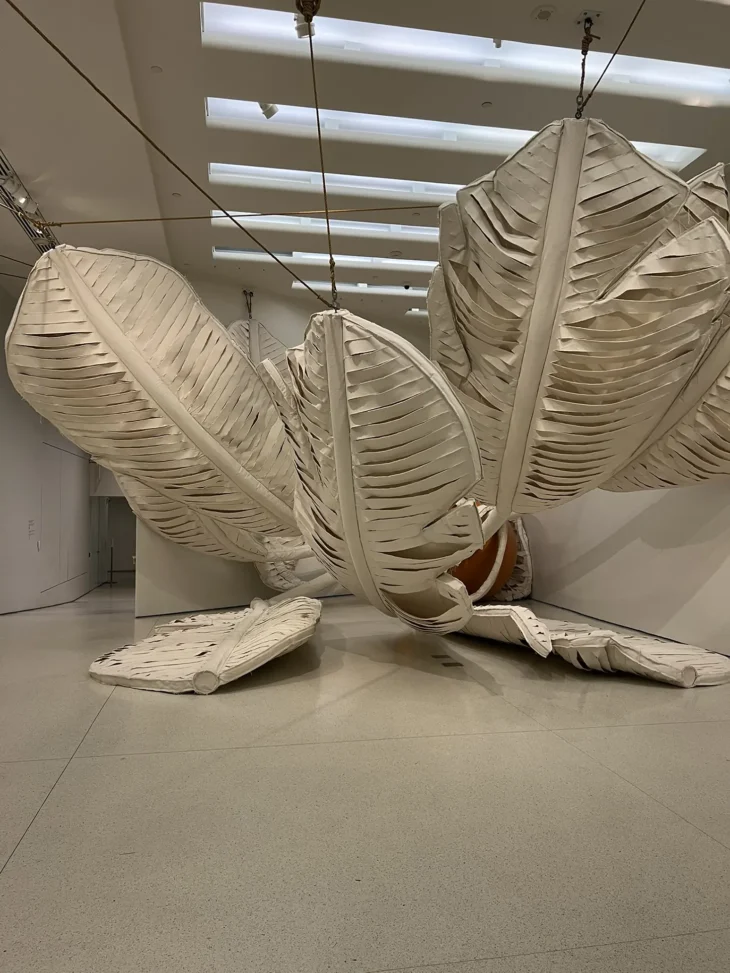
The exhibition’s architecture rewards deep looking. Next to Yayoi Kusama’s INFINITY MIRRORED ROOM – DANCING LIGHTS THAT FLEW UP TO THE UNIVERSE (2019), a major loan that delivers the expected transcendence, stands Claes Oldenburg and Coosje van Bruggen’s Soft Shuttlecock (1995). The massive sculpture, rendered in fabric and stuffing, has not been seen in New York for 25 years, and its installation in the rotunda feels like a deliberate counterpoint to Kusama’s immersive excess. Where the mirror room multiplies the self infinitely, the shuttlecock sits monumentally still, a soft absurdity that anchors the surrounding spectacle.
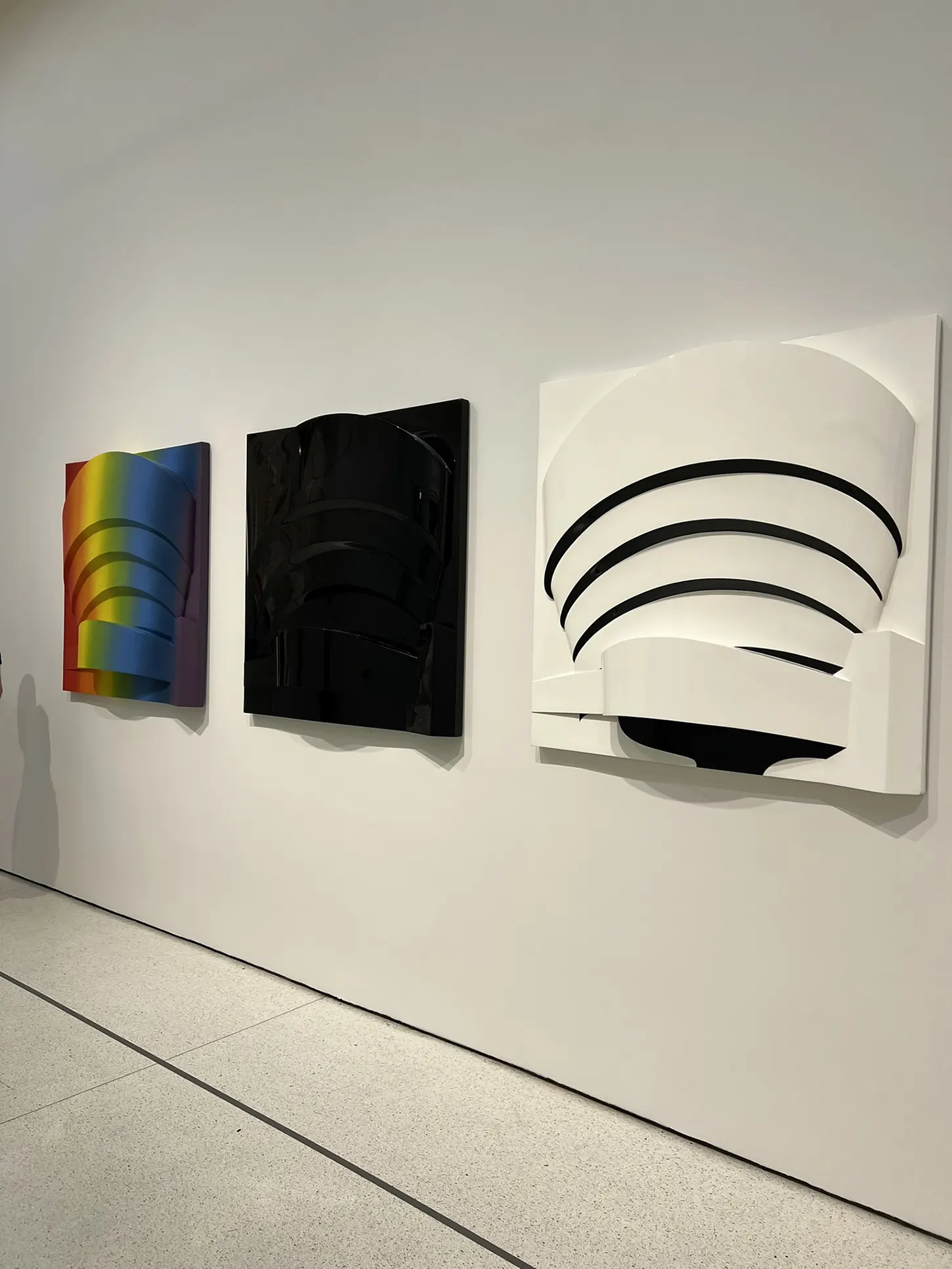
The exhibition’s historical spine runs through Lawrence Alloway, the British curator and critic who introduced Pop art to American audiences with the 1963 Guggenheim exhibition Six Painters and the Object, the first museum presentation of Pop in New York. Historic works chart the emergence of the movement as artists borrowed from advertising, reproduction, and mass media, collapsing the boundaries between high and low. Roy Lichtenstein, Andy Warhol, John Chamberlain, Richard Hamilton, and others demonstrated how Pop could render the familiar strange, elevate the commercial, transform the everyday into the spectacular.
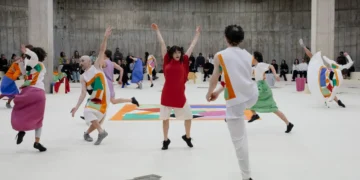
Contemporary acquisitions sharpen this lens. Alex Da Corte’s ROY G BIV (2022), a video installation with recurring live performances, sits comfortably alongside works by Mohamed Ahmed Ibrahim, Farah Al Qasimi, Daniel Gordon, Martine Gutierrez, Lauren Halsey, and others who parse identity, internet culture, and the visual grammar of popular media. The result reads less like a historical survey and more like a conversation about what Pop means now, when the boundaries between commerce and culture have dissolved entirely.
If you’re visiting New York and time is tight, this is the exhibition to anchor your Upper East Side stroll along Fifth Avenue. The Guggenheim’s rotunda currently hosts Carol Bove’s exhibition, a parallel meditation on domestic objects, color, and sculpture that deepens everything around it. Together, these shows make the case that the Guggenheim, in this moment, is indispensable.
For more on the contemporary art scene, see our art coverage and New York scene dispatches. Discover more of the exhibition in our gallery:
Guggenheim Pop: 1960 to Now runs through January 10, 2027. The Solomon R. Guggenheim Museum is located at 1071 Fifth Avenue, New York.