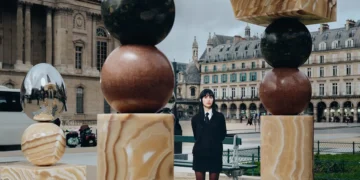



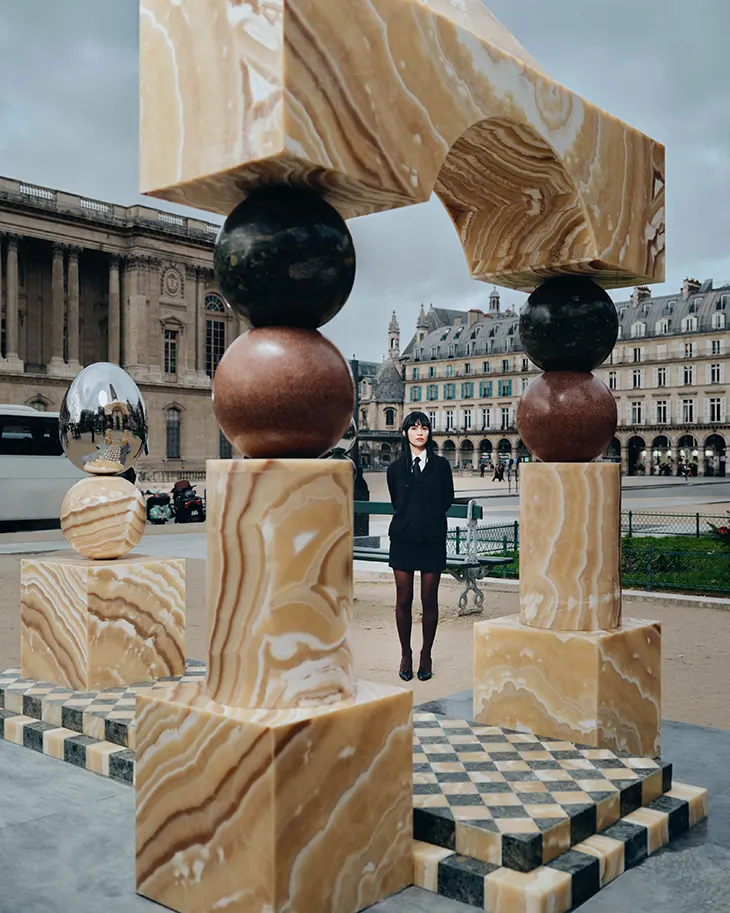
“Mirror Gate II” arrives in Paris as a monumental sculptural installation by Pilar Zeta, positioned on the Place du Louvre and facing the Louvre. The work introduces an architectural form shaped as a symbolic portal, conceived as a dialogue between ancient Egyptian culture and contemporary creation.
ART
Originally presented facing the Pyramids of Giza, “Mirror Gate II” returns in a transformed state for its Paris installation. The sculpture operates as a conceptual passage between Cairo and Paris, carrying with it the memory of its first context while responding to its new surroundings.
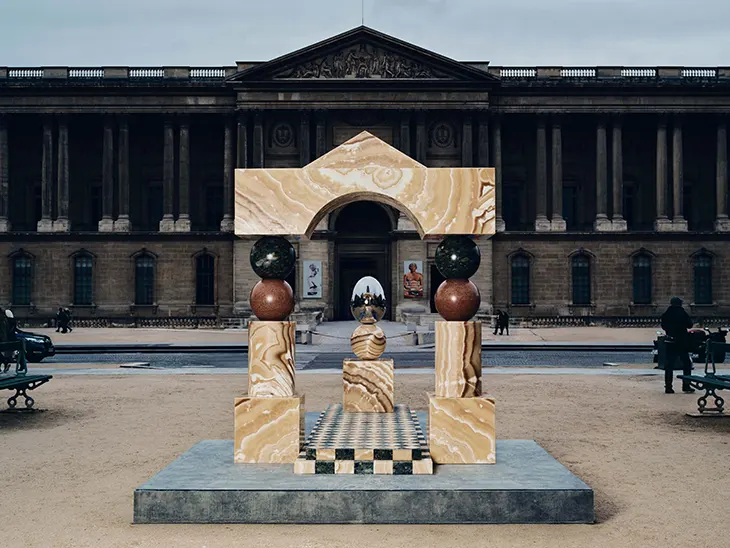
The sculpture draws its physical substance from ancestral Egyptian stones sourced from the Marmonil quarries. Yellow alabaster, red Aswan granite, and Fawakheer breccia shape the structure, grounding the work in materials associated with pharaonic architecture and sculpture.
At the core of “Mirror Gate II,” a checkerboard path introduces a sense of duality and symbolic play. This motif references patterns present throughout Egyptian history, functioning as a visual rhythm that guides visitors inward. The path leads to a mirrored egg positioned at the center of the portal. This form operates as a metaphor for potential, creation, and internal change.
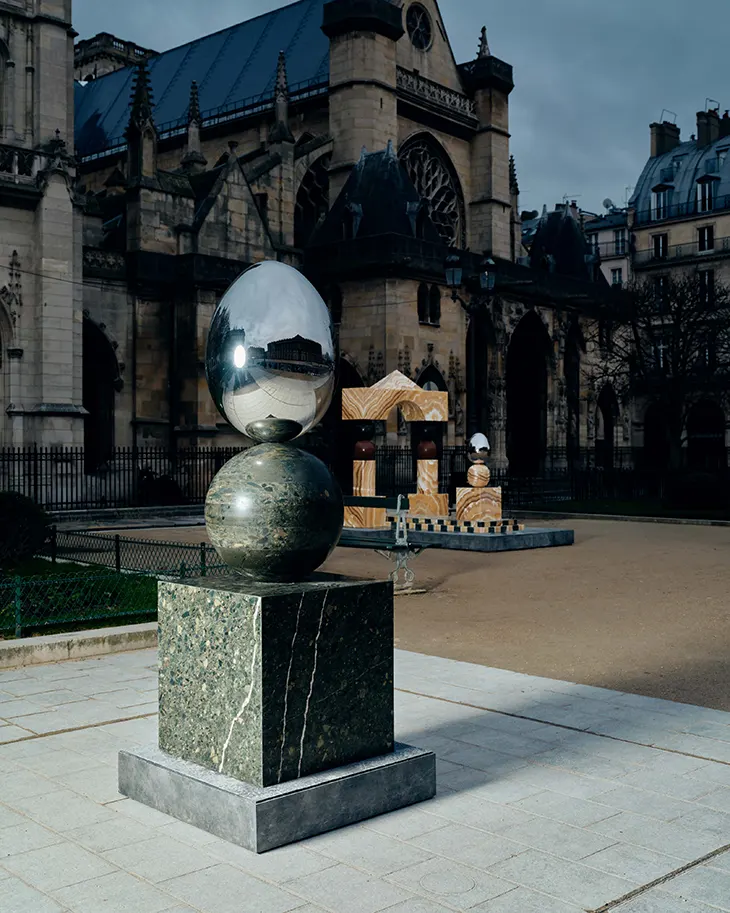
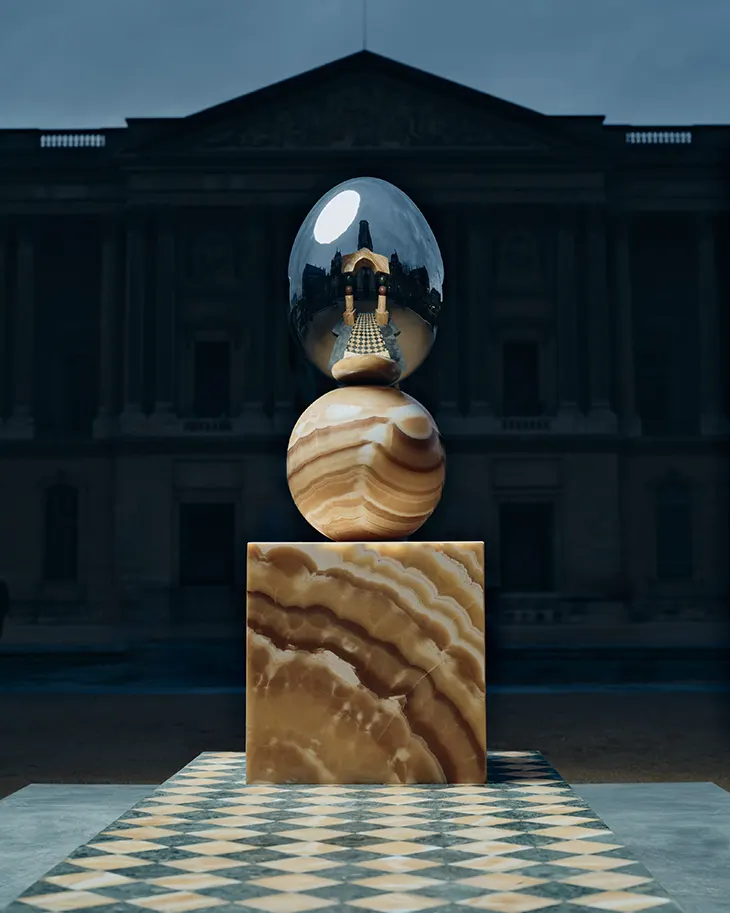
The Paris installation takes place 190 years after the placement of the Luxor Obelisk, offered to France by Egypt’s Viceroy Mehmet Ali. Within this historical continuum, “Mirror Gate II” stands as a contemporary marker of the enduring relationship between France and Egypt, expressed through art, architecture, and shared cultural memory.
Pilar Zeta’s practice consistently explores geometry, philosophy, symbolism, and mysticism through architectural forms and immersive environments. The realization of the sculpture involved Marmonil, a major force within Egypt’s natural stone industry. Marmonil draws from a lineage of stone quarrying that traces back to ancient Egypt, with master stonecutters translating raw material into sculptural form.
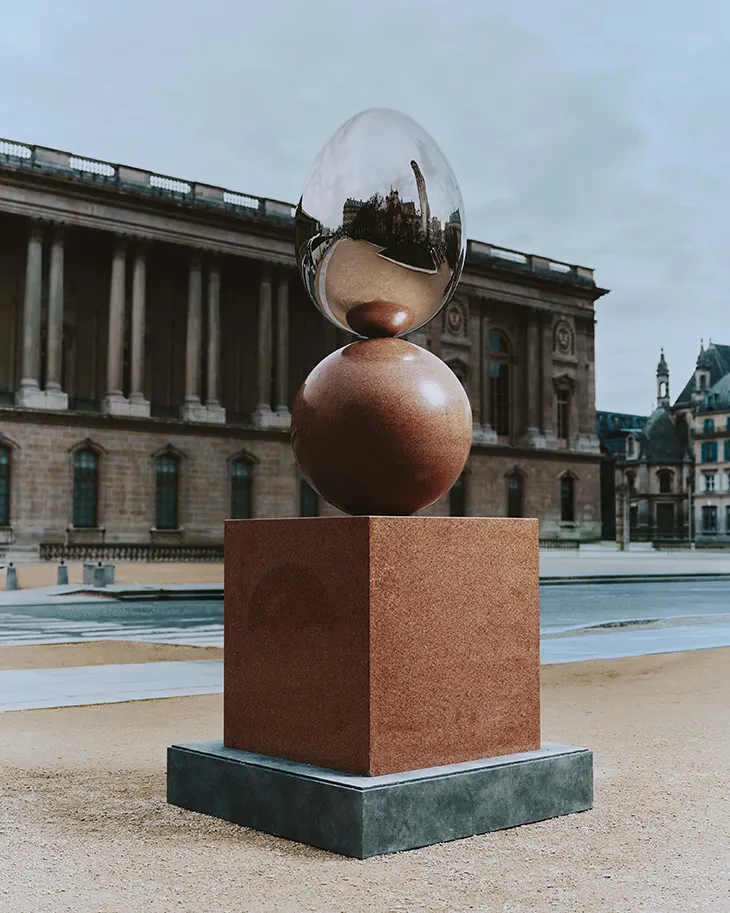
Marmonil recently supplied more than 110,000 square meters of marble and granite for the Grand Egyptian Museum, including Aswan granite from the same quarry used for the colossal statue of Ramses II displayed in the museum atrium.
The collaboration between Pilar Zeta and Marmonil began with a chance encounter in Mexico City in 2024, sparked by a shared approach to stone and symbolic form. The partnership led to the realization of “Mirror Gate” in front of the Pyramids of Giza and continues with “Mirror Gate II,” on view from January 16 to February 15, 2026.