



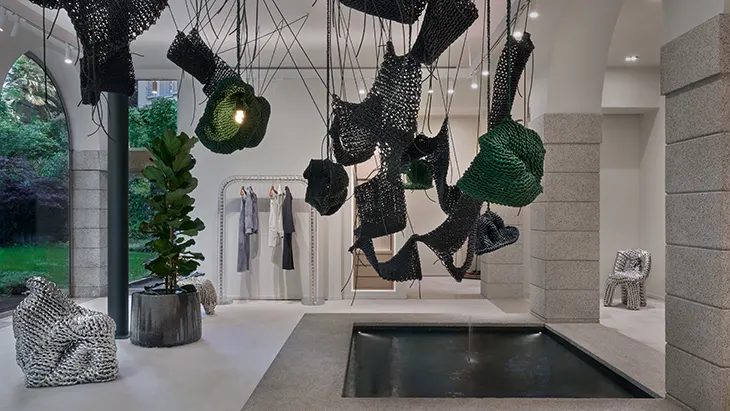
Walk into a Fendi Casa showroom and something strange happens. You stop thinking about sofas. You start thinking about silhouettes, drape, the way a leather armrest curves like a shoulder seam. That blurring is deliberate, and it has been building for three decades.
Fashion brands no longer just dress people. They dress rooms. Armani/Casa launched in 2000. Versace Home arrived in 1992. Loro Piana Interiors, Hermès Maison, Dolce & Gabbana Casa, Missoni Home, Gucci Décor; the list reads like a Milan street map. And in 2024, Louis Vuitton opened its first dedicated homeware space in Paris, a signal that the category has stopped being a side project. All of the brands are competing for spotlight every year at Milan Design Week, a moment to showcased their latest furniture placed within the best of their own interiors.
Why Fashion Moved Into the Living Room
Money is part of it. The global luxury home furnishings market sits somewhere north of $30 billion and keeps climbing, while apparel growth has flattened in several key regions. A $4,000 armchair carries margins that make sense for a house already set up to sell $4,000 handbags. But there’s a softer reason too. Fashion customers aged out of statement logos and into statement living. Someone who bought Bottega Veneta intrecciato in 2008 now wants that same woven texture on a headboard. Brands followed the money and the mood simultaneously.
Milan Design Week made the shift impossible to ignore. During Salone del Mobile, the fashion houses stage installations that pull bigger crowds than some furniture manufacturers. Prada has hosted dinners in converted garages. Hermès built entire paper architecture pavilions in the Pelota courtyard. The furniture world used to tolerate these interlopers. Now it watches them closely.
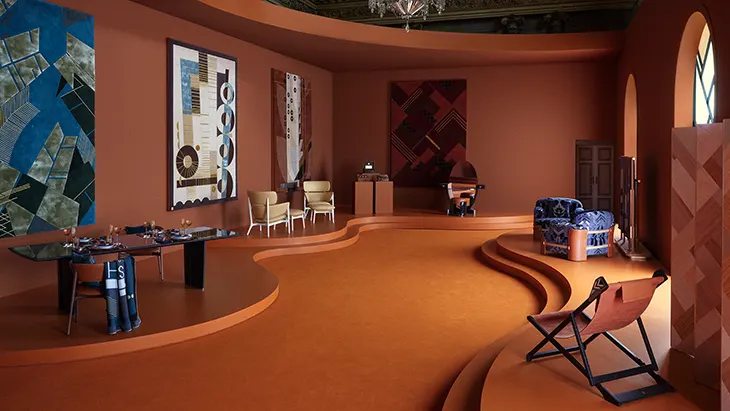
Materials Became the Common Language
Here’s where the crossover genuinely works. Fashion houses understand materials better than almost anyone. Loro Piana spent a century sourcing vicuña and baby cashmere. When that expertise gets applied to upholstery, the result isn’t gimmicky, it’s genuinely superior.
Leather tanning, hand-stitching, jacquard weaving, marquetry; these skills transfer. A Hermès blanket and a Hermès bench share the same workshop logic. The scale changes, the obsession doesn’t.
What This Means for Actual Homes
Most people won’t buy a Versace Medusa dining table. Fine. The influence trickles down faster than the price tags do, and it shows up in three places. Color confidence. Runway palettes hit interiors roughly 18 months later. The burgundy wave that dominated autumn/winter 2024 collections is now showing up on kitchen cabinetry and accent walls everywhere. Texture layering. Fashion taught homeowners to mix bouclé with brushed brass and matte lacquer without apology. Proportion play. Oversized tailoring translated into deeper sofas, chunkier shelving, lower profiles.
Independent makers and renovators have been quick to pick up on this. A client who wants a Dolce & Gabbana kitchen aesthetic on a realistic budget needs bespoke carcasses, custom panel dimensions, and finishes that match a mood board rather than a catalogue page. That usually means ordering furniture board cut to size and building outward from exact measurements, because standard flat-pack widths rarely cooperate with couture-inspired proportions.
The Fitted Furniture Advantage
Fashion-led interiors tend to be architectural. Full-height wardrobes. Banquette seating that hugs an awkward bay window. Wall panelling that runs floor to ceiling without a visible seam. None of that comes off a shelf. Joiners working on these projects often quote tolerances in millimetres, and a 2mm gap in a run of panelling reads as sloppy when the whole point is precision. The fashion houses established that standard. Everyone else now has to meet it.
Where It Goes Wrong
Not every collaboration lands. Some fashion furniture is essentially a logo bolted to an unremarkable frame, priced at four times what the frame deserves. You can spot it quickly. Check whether the piece would still look good with the branding removed. If the answer is no, you’re buying a label, not a chair. There’s also a repetition problem within the fashion houses competing in the furniture market. Walk through enough fashion-house showrooms and you start seeing the same vocabulary: smoked glass, fluted wood, deep olive velvet, a touch of travertine. Individually gorgeous. Collectively, a bit samey.
The houses that avoid this treat interiors as a separate discipline rather than an extension of apparel. Hermès commissions outside designers. Loro Piana leans on material integrity over motif. Those collections age better.
The Practical Takeaway
You don’t need a fashion budget to borrow fashion thinking on the other hand you mostly do need deep pockets for fashion furniture. Start with one material you genuinely love and build the room around it. Fashion houses do exactly this; the collection follows the fabric, not the other way round. Then commit to proportion. Measure properly, order to size, and resist filling gaps with whatever fits. Tailors don’t leave slack in a jacket. Rooms deserve the same discipline.
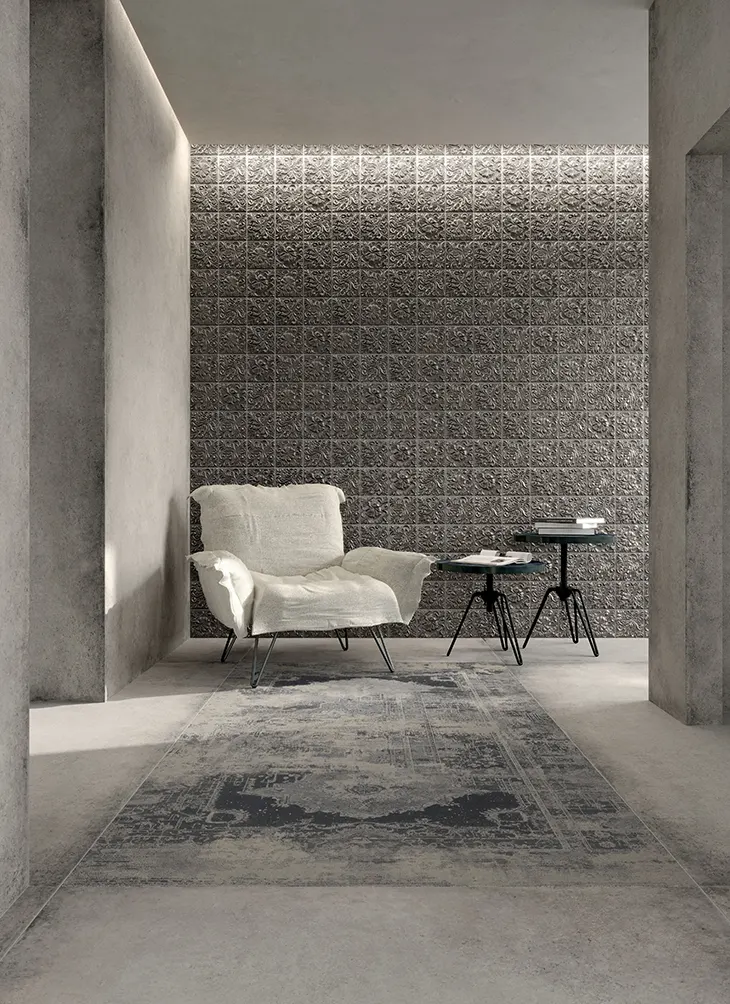
The runway-to-room pipeline isn’t slowing down. Dior has flirted with homeware for years, currently focusing only on table wear, Prada sells teapots, Diesel creates wall tiles. Expect more brands, more collaborations, more beautifully made objects at prices that make you wince. Buy the idea. Skip the markup where you can.