


For much of the past century, industrial spaces were viewed as purely functional. Warehouses stored goods, fulfillment centers moved products, and production floors assembled components as efficiently as possible. Design, in the aesthetic or experiential sense, was rarely part of the conversation. Today, that perspective has changed. Modern industrial environments are increasingly recognized as complex, intentionally designed systems that balance efficiency, safety, technology, and human experience.
From layout and lighting to workflow and equipment integration, industrial spaces are now shaped by deliberate choices that influence productivity, accuracy, and long-term adaptability. These environments are no longer just places where work happens; they are tools that actively shape how work gets done.
From Utility to Strategy: The Evolution of Industrial Design
The shift toward intentional design reflects broader changes in logistics, manufacturing, and labor expectations. Faster delivery timelines, just-in-time inventory models, and tighter margins demand precision. At the same time, workforce shortages and higher safety standards have forced organizations to rethink how space supports human performance.
As a result, industrial design has become strategic. Decisions about aisle width, ceiling height, dock placement, and material flow are made with data, simulation, and long-term scalability in mind. Rather than adapting processes to an inherited building layout, many organizations now design facilities around the work itself. This evolution has transformed industrial buildings from static containers into dynamic systems that support speed, accuracy, and resilience.
Layout as a System, Not a Floor Plan
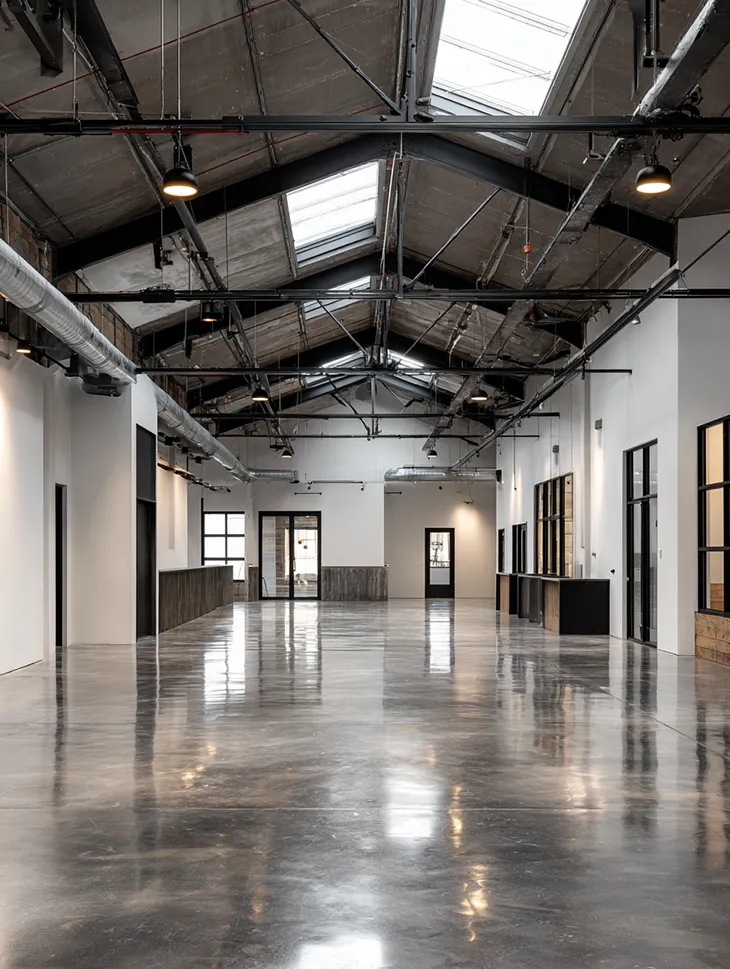
One of the most important shifts in industrial design is the move from simple floor plans to integrated layout systems. Here, every square foot is evaluated based on how materials, people, and equipment interact throughout the day.
Warehouses and fulfillment centers are often designed around flow paths that minimize backtracking and congestion. Receiving areas, storage zones, picking locations, packing stations, and outbound docks are positioned to support continuous movement. Even small inefficiencies can compound at scale. Production floors follow similar principles; for example, workstations are arranged to reduce handoffs, limit unnecessary motion, and support consistent pacing. In both environments, the goal is to reduce friction so that processes feel intuitive rather than forced.
Forklifts as Functional Icons Within the System
Few tools represent industrial environments as clearly as forklifts. While often seen as simple machines for moving pallets, forklifts are deeply embedded in the design logic of warehouses and production spaces. Aisle widths, rack heights, dock layouts, and traffic patterns are all shaped around how forklifts operate safely and efficiently.
Modern facility design considers visibility, turning radius, load capacity, and operator movement when planning space. Dedicated forklift lanes, clear sightlines, and well-marked intersections are no longer optional. And in this way, forklifts become more than equipment; they are part of the spatial language of industrial design, influencing how space is organized and how people move within it.
Human-Centered Design on the Industrial Floor
As industrial work becomes more technologically advanced, human-centered design has gained importance. Employers increasingly recognize that productivity is tied to comfort, clarity, and reduced cognitive load.
Lighting is a key example. Poor lighting increases errors and fatigue, while well-designed illumination improves accuracy and morale. Temperature control, noise reduction, and ergonomic workstations also contribute to sustained performance. Clear signage, color-coded zones, and intuitive wayfinding reduce confusion and training time. These design elements help workers understand where they are, what they’re responsible for, and how to move safely through the space. Rather than treating workers as interchangeable parts within a machine, modern industrial environments are designed to support human decision-making and physical wellbeing.
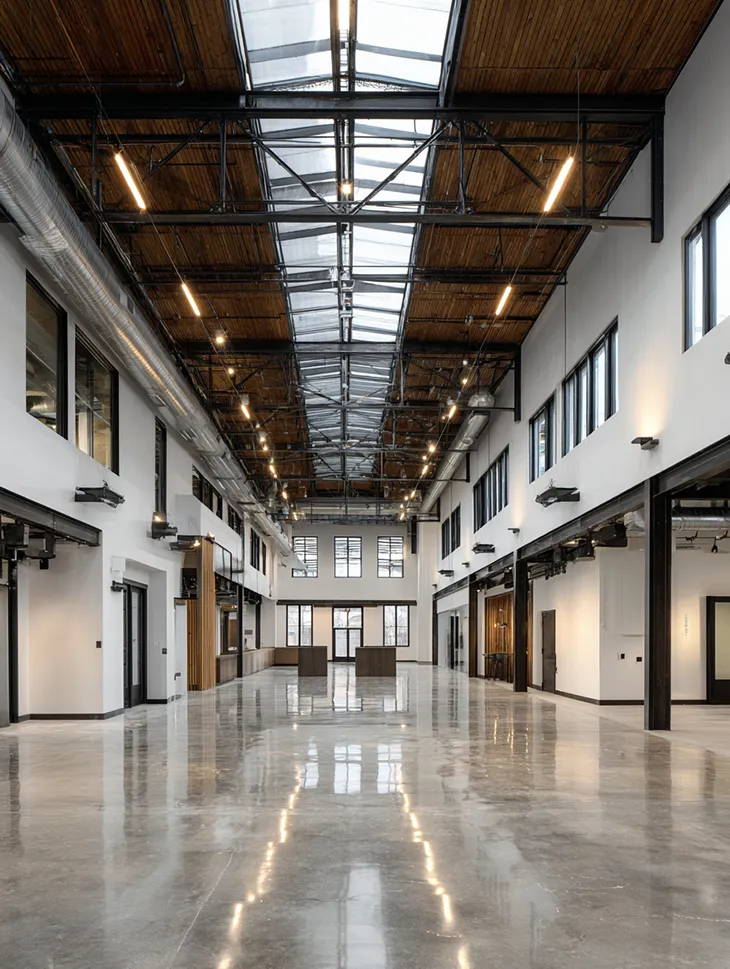
Technology Integration Shapes Space
Technology now plays a central role in how industrial spaces are designed. Warehouse management systems, automated storage solutions, scanning technology, and real-time tracking tools influence everything from ceiling height to power distribution.
Fulfillment centers often incorporate zones optimized for automation alongside areas designed for manual picking or quality control. Production floors integrate sensors, data terminals, and monitoring systems that require thoughtful placement and infrastructure support. Designing around technology means anticipating change. Flexible layouts, modular workstations, and scalable power and data systems allow facilities to evolve as tools and processes advance. This adaptability is critical in industries where technology cycles move faster than building lifespans.
Safety as a Design Principle, Not a Policy
Safety has moved from procedural enforcement to environmental design. Instead of relying solely on rules and training, modern facilities are built to reduce risk by design. Clear separation between pedestrian and vehicle traffic, non-slip flooring, protected equipment zones, and controlled access points all reduce the likelihood of accidents. Visual cues, such as floor markings, lighting changes, and physical barriers, help reinforce safe behavior without constant supervision. Additional safety measures, such as high-quality safety equipment and work gear like welding hoods and lenses from Ridge Products Welding, can further support worker safety within these systems. By embedding safety into the environment itself, organizations reduce reliance on memory and compliance alone.
Industrial Design Is a Competitive Advantage
Warehouses, fulfillment centers, and production floors are no longer just places where work happens. They are carefully designed systems shaped by workflow, technology, safety, and human experience. From layout and lighting to equipment like forklifts that define how space functions, every design choice influences competitive performance.